

Most ideas do not fail in obvious ways.
They do not collapse in a dramatic moment.
They do not end with a clear decision to quit.
They fade.

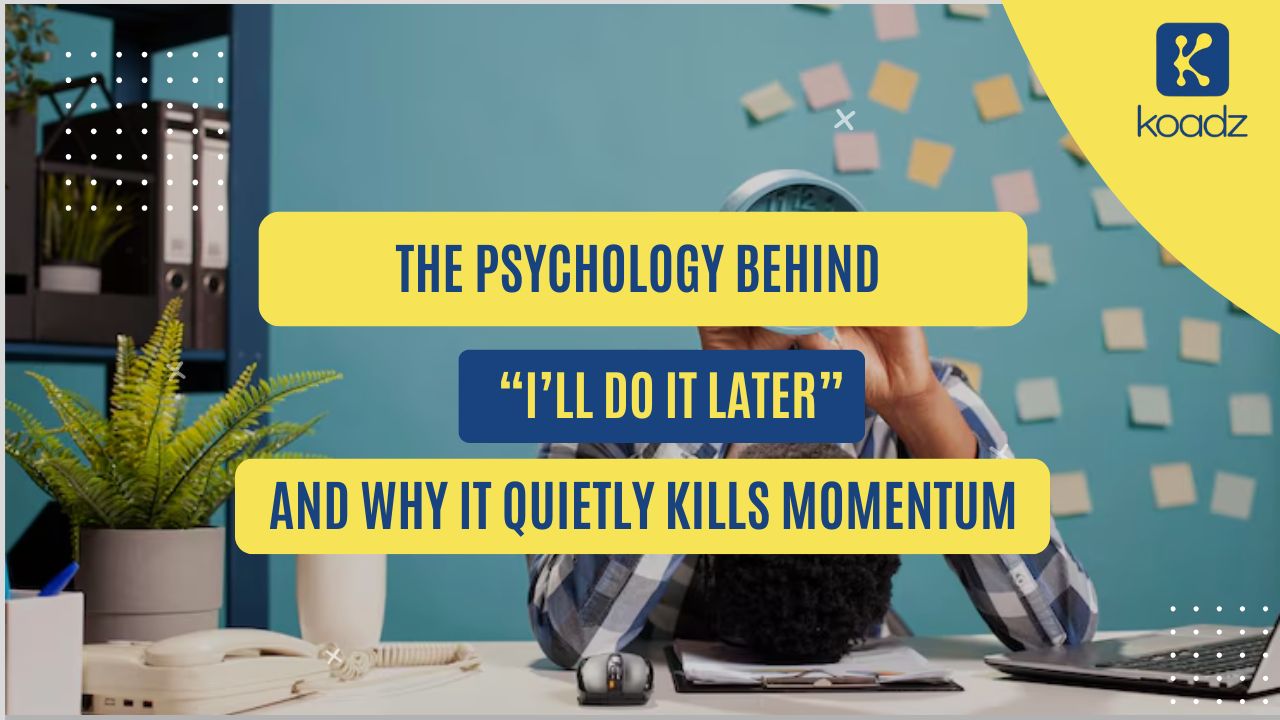
(Person sitting at a desk staring at a blank screen, representing procrastination and delayed ideas)
They sit in notes apps, half-written documents, saved reels, bookmarked articles, and open browser tabs. They stay there with good intentions attached to them. “I’ll get back to this” becomes “when things slow down” and eventually becomes silence.
“I’ll do it later” feels harmless. It feels reasonable. It feels like you are protecting your time.
What it actually does is drain momentum.
And once momentum is gone, even simple tasks start to feel heavy.
Procrastination is not a character flaw. It is not laziness. It is a predictable psychological response to uncertainty and mental effort.
Why Your Brain Pushes Work Away Even When You Care
Your brain is built to conserve energy and avoid discomfort. When a task feels vague, complex, or mentally expensive, the brain treats it as a potential risk.
That reaction happens before logic gets involved.
Two systems are at play.
The limbic system looks for immediate comfort and emotional relief.
The prefrontal cortex handles planning, reasoning, and long-term goals.
When a task has no clear starting point, the limbic system often takes control. The brain chooses actions that provide fast dopamine with minimal effort. Scrolling, checking messages, organizing files, or switching to something familiar feels good quickly.
This is why procrastination feels relieving in the moment. It lowers discomfort right away, even though it increases stress later.
The important insight is this.
The brain does not avoid effort.
It avoids unclear effort.
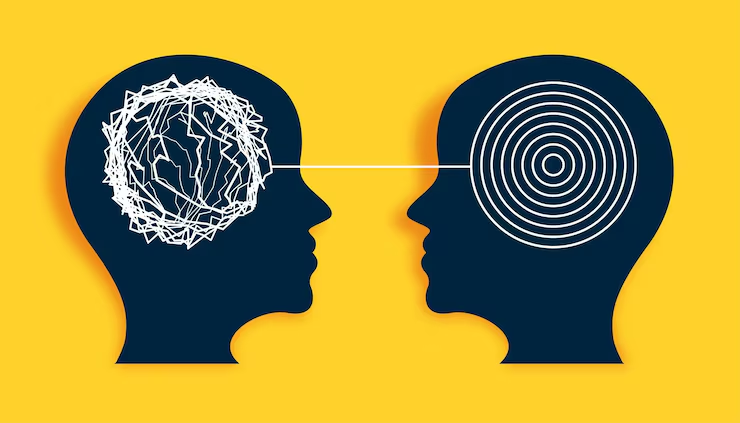
(Illustration showing internal conflict between comfort and focus in the human brain)
When the first step is fuzzy, the brain cannot estimate how much energy will be required or when the reward will arrive. Uncertainty feels expensive, so avoidance becomes the default.
A Familiar Example You Have Probably Lived
Think about opening a blank document with the intention to write something important. The cursor blinks. Nothing happens. Ten minutes later, you are checking something unrelated.
Now compare that to opening a document with a rough outline, a messy first paragraph, or even bullet points that are not great. Writing suddenly feels possible.
The task did not become easier.
The starting point became clearer.
This pattern shows up everywhere.
Notion saw higher user drop-off when people were given empty workspaces. When templates and pre-filled structures were introduced, activation increased.
Fitness apps that begin with short guided workouts retain more users than programs that demand long sessions upfront.
No-code tools outperform traditional development environments for early experimentation because they remove technical ambiguity.

(Person procrastinating)
People do not need more motivation. They need less uncertainty.
How Small Delays Quietly Turn Into Missed Opportunities
Procrastination rarely looks like doing nothing. It looks like postponement.
You delay starting until tomorrow.
Tomorrow turns into next week.
Next week turns into next month.
Each delay adds invisible weight.
The brain begins to associate the task with discomfort, guilt, and pressure. The work itself stays the same, but the emotional cost of starting increases. Many people eventually feel overwhelmed not by the task, but by how long they avoided it.
This is why returning to an old idea often feels harder than starting a new one. The delay has created psychological friction.

(Illustration symbolizing time passing and opportunities fading due to procrastination)
Meanwhile, opportunities expire quietly. Timing shifts. Energy fades. Confidence erodes. None of this happens in a dramatic way. It happens because momentum was never allowed to form.
Case Study: Momentum Beats Perfection in the Real World
Early-stage startups provide a clear illustration of this dynamic.
Airbnb launched with rough photos and a basic website.
Dropbox launched with a simple explainer video before a full product existed.
Instagram launched with a narrow feature set and improved through use.
They did not wait for clarity to arrive. They created clarity by moving.
At the same time, countless well-thought-out ideas never leave planning documents. The difference is not intelligence or effort. It is momentum.
Momentum creates feedback.
Feedback creates clarity.
Clarity reduces resistance.

(Illustration representing small steps that lead to progress and momentum)
This applies just as much to personal projects, content creation, and side businesses as it does to startups.
Why Lowering Starting Friction Changes Behavior
Many people believe motivation comes first and action follows. Behavioral research shows the opposite pattern.
Action produces motivation.
When the first step feels small, visible, and achievable, the brain relaxes. Progress triggers dopamine. Dopamine reinforces the behavior. Movement becomes easier.
This is why lowering starting friction works better than relying on discipline.
You do not need more willpower.
You need a clearer first step.

(Illustration showing a focused work state created by reduced mental friction)
This is also why tools that reduce ambiguity consistently outperform tools that rely on users to figure everything out themselves.
Tools That Work With the Brain Instead of Against It
Writing tools with prompts help people publish more.
Design tools with templates help people create faster.
No-code builders help people ship ideas without technical paralysis.
The common thread is not speed. It is psychological safety. The brain engages when it sees a path forward.
This is where builders like Koadz fit naturally. By turning an idea into a usable first version instead of an empty starting point, it removes the mental resistance that causes delay. The value is not just faster output. It is reducing the cognitive load of beginning.
When something exists in front of you, even imperfectly, your brain shifts from avoidance to engagement.

(Illustration symbolizing forward momentum created through consistent action)
Momentum Is a Psychological Advantage, Not a Personality Trait
Motivation is unstable. It depends on mood, energy, and circumstances. Momentum is different. It compounds.
Once movement begins, tasks stop feeling abstract. Confidence grows through progress, not preparation. The brain starts to expect reward instead of discomfort.
The ideas that survive are rarely the most polished or clever. They are the ones that were started early enough to build momentum.
If something matters to you, waiting to feel ready is often the fastest way to lose it.
Make the first step smaller.
Make it clearer.
Reduce uncertainty.
Clarity creates action.
Action creates momentum.
And momentum is what carries ideas forward long after motivation disappears.
Image credits : Freepik