
Word of mouth is an early-growth accelerant, not a long-term growth system. It thrives inside compact social clusters and weakens as those clusters dissolve. Sustainable growth requires infrastructure that captures attention, trust, and intent before a conversation ever happens.

(Visual showing early-stage business growth accelerating upward, symbolized by a rising line graph and a rocket launch, representing rapid momentum before growth limits appear.)
When Early Growth Feels Inevitable
Most enduring companies begin with the same illusion.
The first customers arrive through introductions.
Those introductions lead to more introductions.
Inbound feels steady.
Momentum feels earned.
There is no formal acquisition engine—only activity. And because growth appears to reinforce itself, it is easy to assume it will continue indefinitely.
At this stage, attention is abundant. Your name circulates naturally inside a small ecosystem. You are discussed in conversations, group chats, and offline contexts where trust is preloaded.
This is why early word of mouth feels effortless. But as explored in Why Attention Is the New Currency for Small Businesses in 2026, attention does not remain free as scale increases. It becomes competitive, fragmented, and algorithmically mediated.
Word of mouth works because attention is concentrated. When attention scatters, referrals weaken.
Why Word of Mouth Works So Well at the Start
Early traction benefits from what can be called network compression.
Dense social overlap
Initial customers often share more than a need. They share environments industries, cities, communities, or digital spaces. This overlap allows information to circulate repeatedly with little effort.

(Illustration of a tightly connected social network enabling fast word-of-mouth sharing.)
Emotional trust proximity
At short social distances, trust is emotional rather than analytical. People rely on the recommender, not the explanation. This mirrors the behavior discussed in The Psychology Behind “I’ll Do It Later” and Why It Quietly Kills Momentum decisions made quickly, emotionally, and without friction.

(Illustration representing trust and credibility in personal recommendations)
Reputation weight
A recommendation inside a close network carries social cost. The recommender is implicitly staking credibility, which gives the message gravity.
Smaller brands also benefit from leniency. People are more forgiving, more generous, and more willing to share positive experiences early on. This emotional halo fades as brands grow and expectations rise.
The Network Saturation Threshold
Every company eventually exhausts its original network.
Consider a small service business that grows entirely through referrals. In the beginning, each new client knows at least one existing one. Over time, inquiries arrive without context. Prospects have heard of the business, but cannot explain why they should trust it.

(Illustration of a growing network where connections become stretched and fragmented, showing how relationships weaken as a network expands.)
This moment is the Network Saturation Threshold.
Weakening connections
As social distance increases, recommendations move through feeds, screenshots, or secondhand mentions rather than conversations. Meaning is lost.
Trust decay
What once felt like advice now feels like promotion. This is why businesses increasingly rely on proof artifacts websites, case studies, visual identity, and clarity.
Irregular growth
Growth turns unpredictable. Some weeks spike. Others stall. Negative experiences, reviews, or misinterpretations spread faster than quiet satisfaction especially when there is no owned platform shaping the narrative.
This is not a product failure. It is a network limitation.

(Illustration representing unpredictable business growth with spikes and drops.)
When the Curve Flattens Quietly
The warning signs are subtle:
- Customers remain satisfied
- Retention stays healthy
- Referrals feel inconsistent
- Revenue becomes harder to forecast
At this point, relying on word of mouth alone becomes risky. Buyers especially in B2B need structured clarity, not stories.
This is why many businesses discover too late that they are invisible where decisions are actually made: search results, AI answers, comparison pages, and first impressions. The issue is not being talked about—it is not being found. This shift is central to How Businesses Can Show Up in AI Answers in 2026.
What Actually Scales After Word of Mouth
The solution is not advertising.
It is systems.
Systems create presence without proximity.
They include:
- Search visibility and content depth
- Clear brand positioning and consistency
- Websites that convert attention into action
- Lifecycle communication and follow-up
- Referral programs that are intentional, not accidental
This is where platforms like Koadz quietly matter. Instead of relying on chance conversations, Koadz helps businesses turn their website into a structured trust system combining performance, clarity, and discoverability so the brand speaks consistently even when the founder is not present.
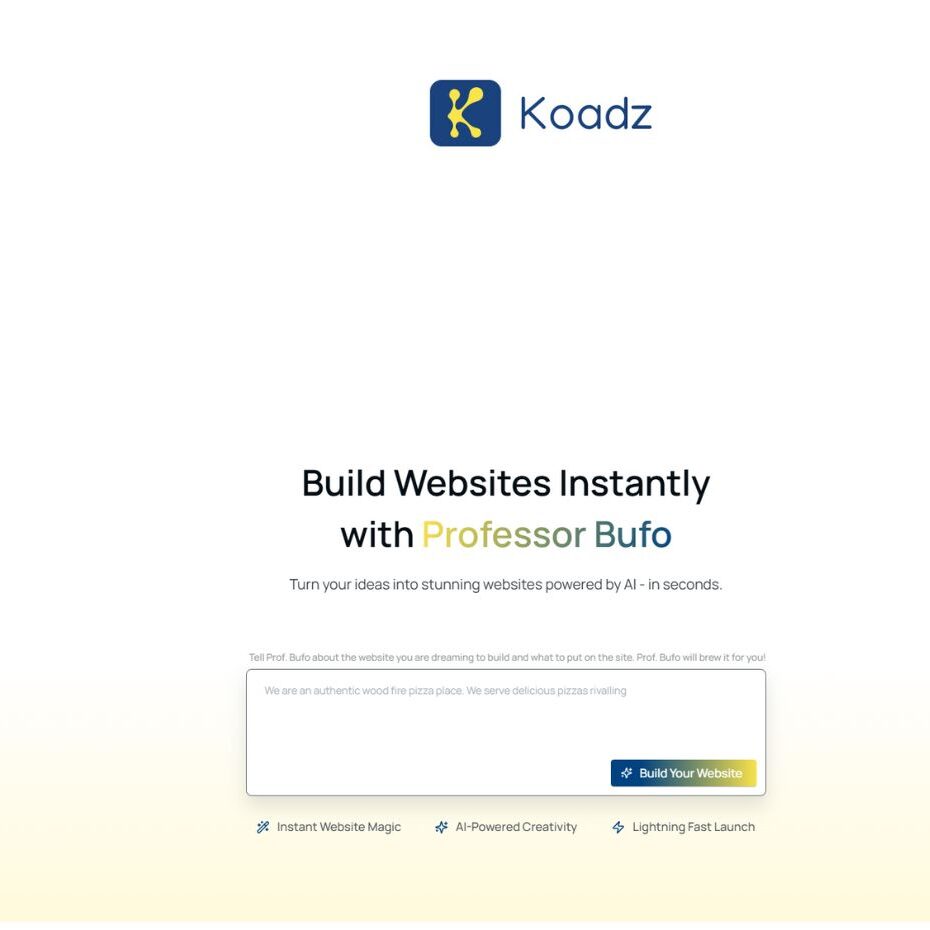
(Koadz dashbaord)
As outlined in Beginner Website Checklist: 12 Things to Prepare Before You Launch and Mobile-First Design: Why It’s the Only Approach That Works in 2025, infrastructure decisions compound long after referrals slow down.
Amplifying Word of Mouth Instead of Depending on It
High-growth businesses do not abandon referrals. They design for amplification.
They:
- Respond to reviews with emotional intelligence
- Reduce referral friction with links and tracking
- Pair stories with proof, case studies, visuals, data
- Maintain brand consistency across every touchpoint

(Illustration representing amplification of word of mouth through marketing systems and analytics.)
This consistency is not cosmetic. It is cognitive. As explained in The 2026 Guide to Brand Image Consistency Across Your Website and The Complete Guide to Brand Guidelines for 2026, repetition builds familiarity, and familiarity substitutes for trust at scale.
Platforms like Koadz support this by ensuring that design, messaging, and performance reinforce each other especially for businesses without large marketing teams.
Metrics That Reveal the Truth
To understand whether word of mouth is working or merely present, track:
- Net Promoter Score
- Referral conversion rate
- Word-of-mouth lift relative to system-driven acquisition
When these plateau, the solution is rarely “ask customers to share more.” It is build better surfaces for trust.

(Laptop displaying business analytics and performance metrics)
Foundation and Structure
Word of mouth lays the foundation.
It delivers early customers, early confidence, and early proof.
But foundations do not grow buildings.
Systems do.
They turn attention into intent.
They turn stories into visibility.
They turn randomness into reliability.
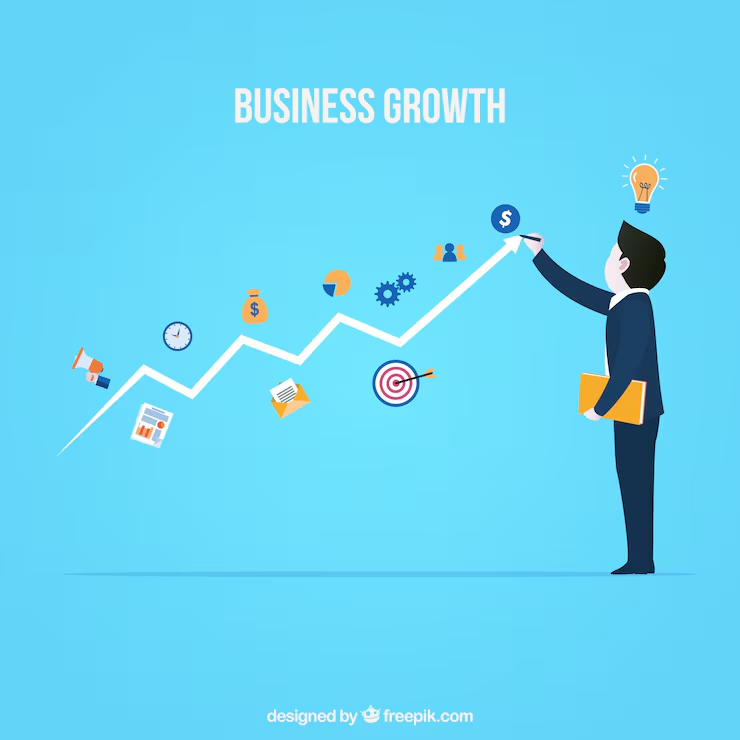
(Illustration representing scalable business growth driven by structured systems.)
In 2026, the businesses that survive will not just be talked about.
They will be discoverable, credible, and consistent whether someone hears about them from a friend, a search engine, or an AI answer.
And that is the difference between being recommended
and being chosen.