
These two terms get used interchangeably all the time and they are not the same thing. Understanding the difference helps make smarter decisions about what an online presence actually needs at any given stage.
What a Landing Page Is
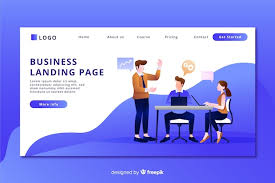
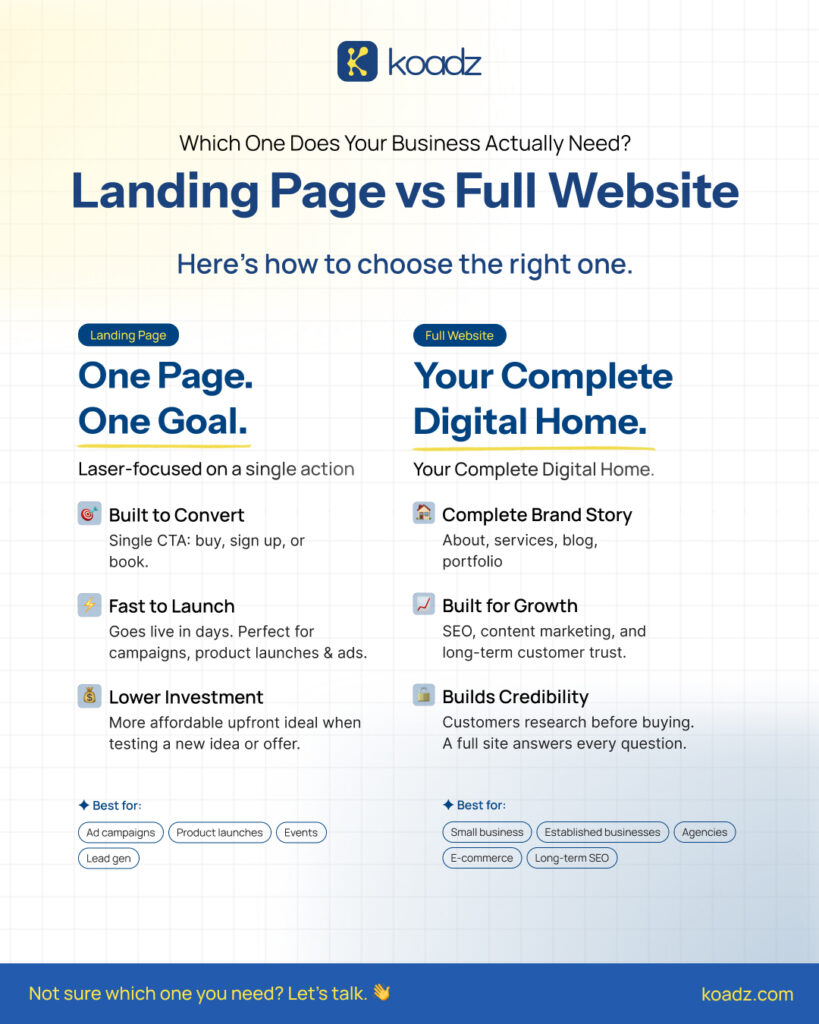
A landing page is a single page built around one specific goal. Everything on it points toward one action. Sign up for this. Register for that. Buy this now. Download this.
There’s typically no navigation bar taking visitors elsewhere. No about page. No blog. Just one focused message and one clear call to action. That focus is the whole point.
Landing pages are incredibly effective when the goal is narrow and specific. A business running a single campaign, a freelancer promoting one service, a startup collecting early signups before launch. These are all situations where a single well built page can do serious work precisely because there’s nothing to distract the visitor from what’s being asked of them.
What a Website Is
A website is a collection of pages that together tell the full story of a business, brand, or person.
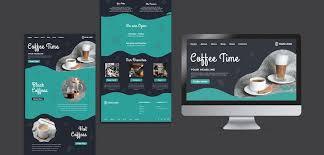
A homepage that introduces what’s on offer. A services or products page that goes into detail. An about page that builds trust and context. A contact page that makes reaching out easy. A blog that brings in organic traffic over time. Testimonials that show social proof. A portfolio that demonstrates past work.
Each page serves a different purpose and together they create a complete picture. A visitor can arrive at any page, navigate to wherever they want to go next, and leave with a thorough understanding of who they’re dealing with
When a Landing Page Is the Right Choice
A landing page works well in specific situations.
Testing a new idea before building something bigger. Promoting a single product or limited time offer. Running a paid ad campaign where focus matters more than breadth. Collecting emails before a launch. Building a quick presence for a specific event or project.
For early stage founders validating ideas, a landing page is often the smarter starting point. Build it fast, put it in front of people, and see if there’s genuine interest before investing time and money into a full website.
Before building anything though, it’s worth thinking carefully about what the page actually needs to communicate. Why Your Website Should Answer Fewer Questions, Not More gets into why clarity beats comprehensiveness almost every time, which applies just as much to a landing page as it does to a full website.
When a Landing Page Stops Being Enough
The problem with a single page is that it can only say so much.
A visitor who wants to know more about the business, see past work, understand the full range of services, or figure out whether this is a company worth trusting has nowhere to go. They either trust what’s on the one page or they leave.
For most businesses past the idea validation stage, that’s a real problem. Potential clients want context. A single page rarely provides enough of that, especially in competitive markets where the person comparing options has four other tabs open at the same time.
A business offering multiple services needs room to explain each one properly. A consultant needs more than a homepage to justify their rates. A brand trying to rank on Google needs content across multiple pages to build search presence. One page runs out of room quickly.
The SEO Problem With a Single Page
This is one of the most overlooked reasons to move from a landing page to a full website.
Search engines rank pages, not just websites. A single page can only target a limited number of keywords before it starts to feel stuffed and unfocused. A multi page website can dedicate separate pages to separate topics, each one targeting different search terms, each one bringing in a different type of visitor.
A landing page for a photography business might bring in people searching for “wedding photographer.” But a full website with dedicated pages can also bring in people searching for portrait photography, event photography pricing, how to choose a wedding photographer, and dozens of other terms a single page simply cannot cover.
Over time the gap between a single page site and a properly structured website compounds significantly in search visibility. And structure matters even more on mobile, where most visitors will see the site first. Mobile First Design: Why It’s the Only Approach That Works in 2025 explains exactly why mobile structure should be the starting point for any new website, not an afterthought
Which One Does a Business Actually Need
Start with a landing page if the goal is speed, validation, or a focused campaign. It’s the fastest way to have something live and working without overbuilding before the idea is proven.
Move to a full website when the business has more to say than one page can hold. When clients need context. When multiple services need their own space. When SEO starts to matter.
Koadz’s free plan gives one page to start with, enough to get something live and test whether it brings results. The paid plans unlock the room to build a proper multi page website when the business is ready for that next step.
Most businesses don’t stay at the landing page stage forever. The ones that move to a full website earlier tend to build credibility and search presence faster than those that wait.
“A landing page gets attention. A website builds trust. Most businesses need both, just at different stages.”