
Most small business owners assume that digital marketing means running ads, boosting a post on Instagram or setting up a Google Ads campaign and waiting for the phone to ring. While paid advertising has its place, it stops working the moment you stop paying. SEO, or Search Engine Optimization, is fundamentally different because the results compound over time.
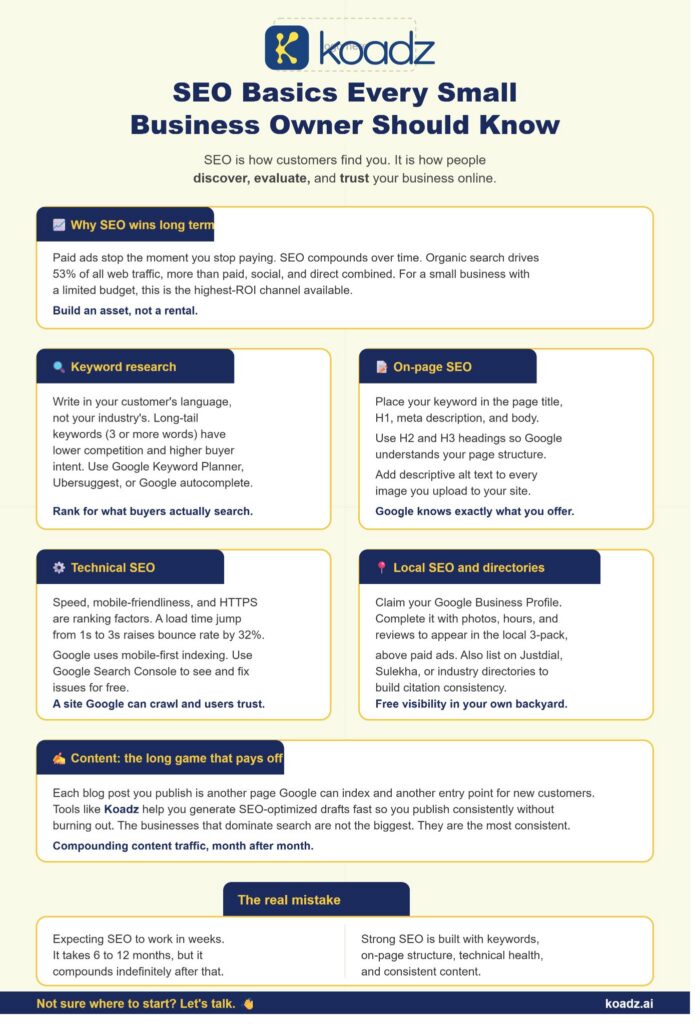
When your website ranks on the first page of Google for a search your customers are already making, you receive that traffic continuously without paying per click. According to BrightEdge, organic search drives over 53% of all website traffic across industries, more than paid search, social media, and direct traffic combined. For a small business with a limited marketing budget, this is the highest-ROI channel available.
The businesses that invest in SEO today are building an asset; the ones that skip it are renting visibility they cannot afford to sustain.
Keyword Research: Speak the Language Your Customers Use
The single biggest SEO mistake small businesses make is writing content in the language of their industry rather than the language of their customers. A law firm that optimizes for “tort litigation services” will be invisible to someone Googling “what to do if I get into a car accident.”
Keyword research is the process of identifying the exact phrases your potential customers type into search engines, and it should inform every page on your website. Free tools like Google Keyword Planner, Ubersuggest, and even Google’s own autocomplete function reveal search volumes and related queries you may never have thought of.
The sweet spot for small businesses is long-tail keywords, phrases of three words or more that are specific enough to have lower competition but high enough intent that the person searching is close to making a decision. “Best bakery in Koramangala” will convert far better than just “bakery,” because the person searching already knows what they want and where they want it.
On-Page SEO: Structuring Your Content So Google Understands It
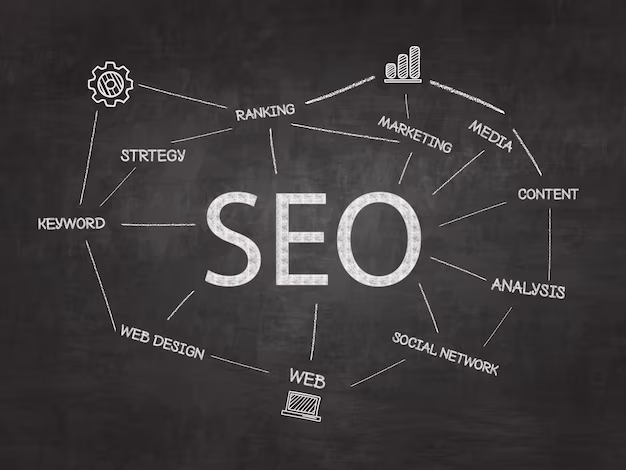
Once you know your keywords, the next step is placing them strategically across your web pages in a way that both search engines and human readers find natural. Every page on your website should have one primary keyword target, and that keyword should appear in four key places: the page title (the text that appears in browser tabs and search results), the H1 heading (the main headline on the page), the meta description (the short summary shown under your link in search results), and naturally throughout the body content.
Heading tags, H1, H2, H3, are not just visual formatting tools; they signal content hierarchy to Google, so structuring your page with clear, descriptive subheadings helps the algorithm understand what each section covers. Image alt text is another commonly ignored on-page element.
Every image on your site should have a brief, descriptive text label, which both improves accessibility for visually impaired users and gives Google additional context about your page’s content. Internal linking, meaning linking from one page on your site to another relevant page, keeps visitors engaged longer and distributes what SEO professionals call “link equity” across your site, strengthening pages that might not yet have strong external links pointing to them.
Technical SEO: The Foundation Nobody Sees But Everyone Feels
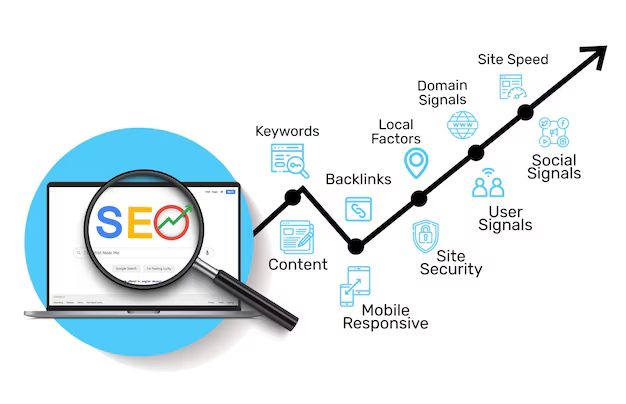
Technical SEO refers to the backend factors that determine whether search engines can access, crawl, and index your website properly, and whether users have a good enough experience to stay once they arrive. Page speed is one of the most critical technical factors: Google’s own research shows that as page load time increases from one second to three seconds, the probability of a user bouncing increases by 32%.
You can test your site’s speed for free using Google PageSpeed Insights, which also provides specific recommendations for improvement. Mobile-friendliness is no longer optional. Google uses mobile-first indexing, meaning it primarily evaluates the mobile version of your site when determining rankings, so a site that looks great on desktop but breaks on a phone will rank poorly regardless of how good its content is. HTTPS, indicated by the padlock icon in a browser’s address bar, is both a ranking signal and a trust signal; any site still running on HTTP in 2024 is actively being flagged as “not secure” to visitors.
Google Search Console is the free tool that gives you a direct window into how Google sees your site, showing you which pages are indexed, which have errors, and which queries are driving impressions and clicks.
Local SEO and Content: The Long Game That Pays Off
For small businesses that serve a specific geography, local SEO is arguably more valuable than general SEO because the competition is narrower and the intent of local searchers is high. The single most impactful free action any local business can take is claiming and fully optimizing their Google Business Profile, adding accurate contact information, business hours, high-quality photos, the correct business category, and actively collecting customer reviews.
Businesses with complete profiles and strong review counts consistently appear in the local “3-pack,” the three business listings that appear above regular search results for location-based queries, which capture the majority of local clicks. Beyond local listings, publishing consistent blog content on your website is the long-term compounding strategy that separates businesses with durable online visibility from those that plateau.
Each blog post you publish is an additional page Google can index, an additional keyword you can rank for, and an additional entry point through which a potential customer can discover your business. If content creation feels overwhelming, AI tools like Koadz can significantly reduce the time and effort involved, helping you generate SEO-optimized drafts, suggest topic ideas based on your niche, and maintain a consistent publishing cadence without needing a full-time content writer on your team.