It’s likely that you have entered a web URL into your browser hundreds of times without ever pausing to consider what it is or how it functions. Although a domain name may seem like a technical term, if you understand it, it’s actually quite easy.
A domain name is, in essence, a website’s address. It’s what you enter into your browser to go to a specific website. One domain name is Google.com; another is Amazon. in. Your business website can have a custom domain name too.
So why are domain names necessary? Without them, each time you wanted to access a website, you would have to remember a lengthy string of numbers known as an IP address. Not exactly easy to remember! Domain names replace those numbers with simple, human-friendly names that are much easier to type, remember, and share.
In our previous blog, “How to Create a Professional Online Presence Without Hiring a Developer,”we explored simple steps to create your professional business website without having to dabble with complex code, from setting a structure for your website to designing, adding content, making it compatible with mobile phones and testing it.
How It Actually Works
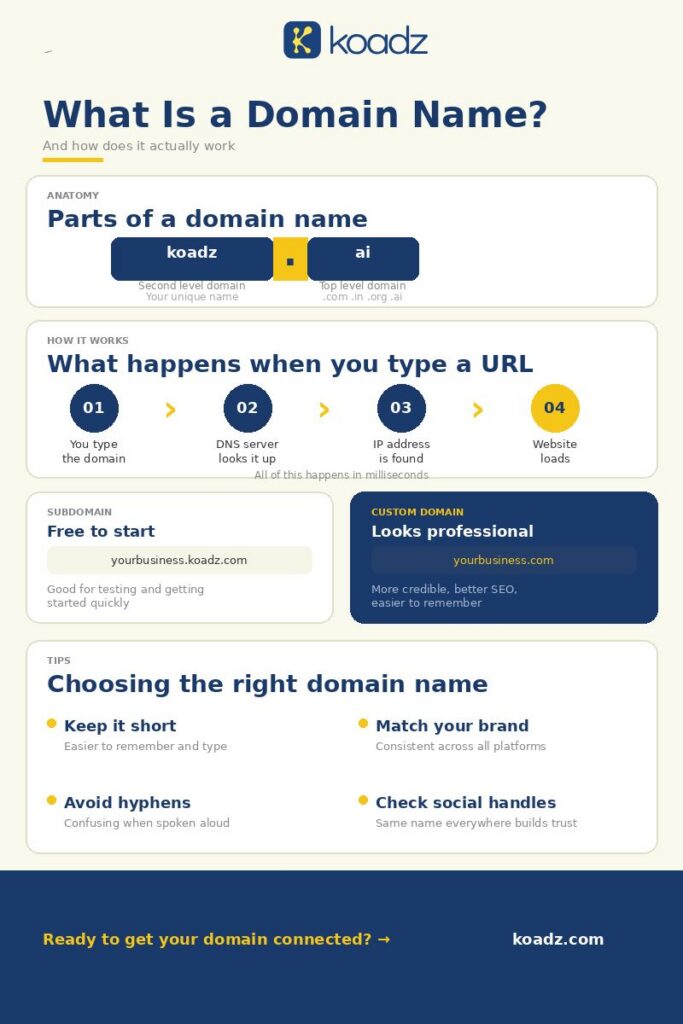
Have you ever wondered what happens when you hit Enter after typing a domain name into your browser? In a matter of few seconds, a number of background events take place.
First, your browser sends a request to something called a DNS server, which stands for Domain Name System. DNS is just like an address book of the internet. It locates the IP address associated with the domain name and helps your browser connect to the correct server where the website is hosted.
You don’t see any of this happening. In fact, it all happens so quickly that the website can start loading almost immediately. But without this behind-the-scenes process, simply typing a domain name and reaching the right website wouldn’t work the way it does today.
The Different Parts of a Domain Name
A domain name has a few simple parts that are worth knowing.
The main part is the unique name you choose for your website. This is called the second-level domain. For example, in koadz.ai, “koadz” is the second-level domain.
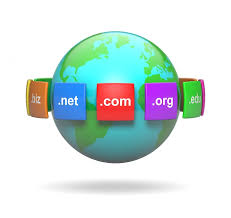
Then there’s the part that comes after the dot, known as the top-level domain, or TLD. You’re probably most familiar with .com, but there are many others. .in is commonly used for India, .org is often used by organisations, and .ai is popular among technology and AI-focused businesses.
Put these parts together, and you have the complete domain name that people type into their browser to find your website.
Subdomain vs Custom Domain
When you first create a website on most platforms, you’ll usually get a subdomain. It might look something like yourbusiness.platformname.com. That’s perfectly fine when you’re just getting started or testing out your website.
A custom domain is different. It’s your own web address, such as yourbusiness.com, which you register separately and connect to your website. This small difference can make a big impact on how your business looks online.
A custom domain gives your website a more professional and established feel. It’s easier to remember, easier to share, and looks much better on things like business cards, emails, and advertisements. It also gives you a branded web address that you can continue using as your business grows.
Most website builders, including Koadz’s paid plans, let you connect a custom domain. So, if you’ve purchased a domain separately, you can link it to your website and have visitors see your own business address instead of the platform’s subdomain.
How to Get a Domain Name
So, how do you actually get a domain name? You buy one through a domain registrar. These are companies that handle domain registrations. You may have come across names like GoDaddy, Namecheap, or Google Domains.
The process is pretty straightforward. Search for the domain name you want, check if it’s available, pay the registration fee, and it’s yours to use. You just need to renew it when the registration period ends to keep the domain active.
The price depends on the type of domain extension you choose and the registrar you buy it from. Popular or highly sought-after domain names can cost more, while many regular business names are available at a reasonable yearly price.
Once you’ve purchased your domain, the next step is to connect it to your website. This is usually done through your domain settings and is commonly referred to as DNS configuration or domain mapping, depending on the platform you’re using.
Choosing the Right Domain Name
When choosing a domain name, a few simple things are worth keeping in mind:
1. Keep it short.
Short domain names are easier to remember, type, and share. They’re also less likely to be misspelled.
2. Keep it close to your business name.
Using the same or a similar name for your business, domain, and social media handles makes it easier for people to recognise your brand.
3. Avoid hyphens and numbers.
They can be confusing when you’re telling someone your domain name verbally and can make the address harder to remember.
4. Choose the right TLD.
For most Indian businesses, .com and .in are common choices. If you’re in the technology or AI space, .ai is another option that has become increasingly popular.
5. Check your social media handles too.
Before settling on a name, see if something similar is available on the social platforms you plan to use. Having a consistent name across your website and social media can make your brand much easier to find.
Why Getting the Domain Right Early Matters
A domain name may be a small investment, but it can become a long-term part of your business identity. Once people start associating a particular domain with your brand, changing it later can be confusing and may mean rebuilding some of the online presence you’ve already worked to establish.
That’s why it’s worth choosing the right name from the start. Register it before someone else does, connect it to a well-built website, and you’ll have an online identity that can grow alongside your business instead of creating problems you’ll need to fix later.
Conclusion
A well-chosen custom domain name reinforces your business identity and makes your website simpler to find and trust. Have you chosen the best one for your business? Ready to build your website? Visit koadz.ai or email info@koadz.ai to get started.