
Pitching today is radically different from a decade ago. Investors skim material on mobile, most pitches happen over Zoom, and attention windows are shorter than ever. But one thing hasn’t changed:
Your pitch deck is still the fastest way to express what you’re building and why it matters.
What has changed is how a pitch deck should be created and delivered. Founders who adjust to the new formats early gain a clear advantage.
This guide walks you through the complete 2025 landscape: evolving formats, narrative structure, slide essentials, mistakes to avoid, and the modern toolset
1. Why Pitch Decks Still Matter in 2025
Remote pitching has transformed the way investors interact with decks. They typically skim, not read, and often spend under 15 seconds per slide. If a deck isn’t sharp, intuitive, and visually calm, it gets dismissed quickly.
While PDFs remain the default file investors expect, web-based decks are rapidly becoming the preferred option for deeper evaluation because they deliver more dynamic storytelling and richer engagement.
(Pitch deck presentation)
2. The Founder’s Challenge: Deck Creation Is Harder Than It Seems
Many founders assume the hard part is “designing slides.”
In reality, the real challenge is decision-making:
What is the clearest version of the story?
Which sequence makes the narrative strongest?
Which data actually matters?
Why does this slide feel crowded?
Why am I nudging this text box again?
Most founders lose hours polishing formatting instead of improving their message.
AI-first builders like Koadz eliminate layout and spacing headaches by generating clean, responsive structures automatically, allowing founders to channel their energy into clarity and strategy.
3. PDF vs Web-Based Pitch Decks: How to Choose
Both formats are useful, but they serve different scenarios, and using them strategically can improve investor engagement.

(Web-based decks vs static PDFs)
PDF Decks
Still the standard for investor inboxes. They’re easy to skim, simple to forward, and work everywhere. Ideal for initial outreach and quick reviews.
Web-Based Decks
Once an investor shows real interest, this format shines. They feel more like a guided product experience than a static file and offer benefits such as:
Embedded demos and interactions
Real-time updates (no more endless “final_v5.pdf”)
Password protection
View analytics to understand investor behavior
They also format beautifully on mobile, which is crucial in 2026.
In practice:
Use a PDF to get attention. Use a web deck to deepen interest.
Most high-performing founders now rely on both formats.
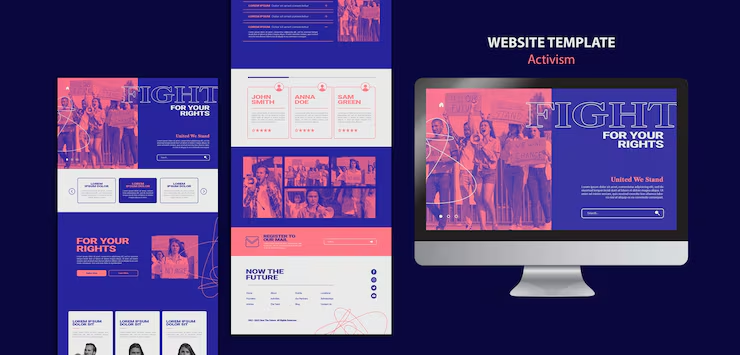
(Example of a web-based pitch deck layout)
The smartest approach:
Use a PDF to open the door, and a web deck to deepen interest. Many founders now create both versions side-by-side, something AI tools like Koadz make effortless by generating a polished website deck and a matching PDF in the same workflow.
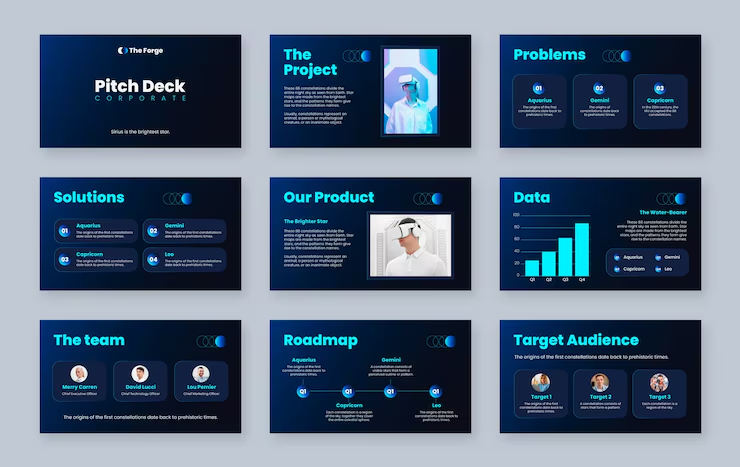
4. The Core Slides Every 2025 Pitch Deck Should Include
Regardless of design style, investors expect a clear and complete structure. A strong 2025 pitch deck typically includes:
- Cover : Your brand, tagline, and first impression
- Problem : The user pain or unmet need
- Solution : How your product directly solves it
- Product / Demo : Screens, visuals, or a live showcase
- Market Opportunity : TAM, trends, and timing
- Business Model : How the company makes money
- Traction : Early proof, metrics, or adoption
- Go-To-Market : Your distribution and acquisition approach
- Competitive Landscape : Your position and unique edge
- Team : The people behind the vision
- Roadmap : What’s coming next
- The Ask : How much funding you need and what it enables
When presented with clarity and consistency, these elements create a narrative investors can evaluate quickly and confidently.
(Core pitch deck slides)
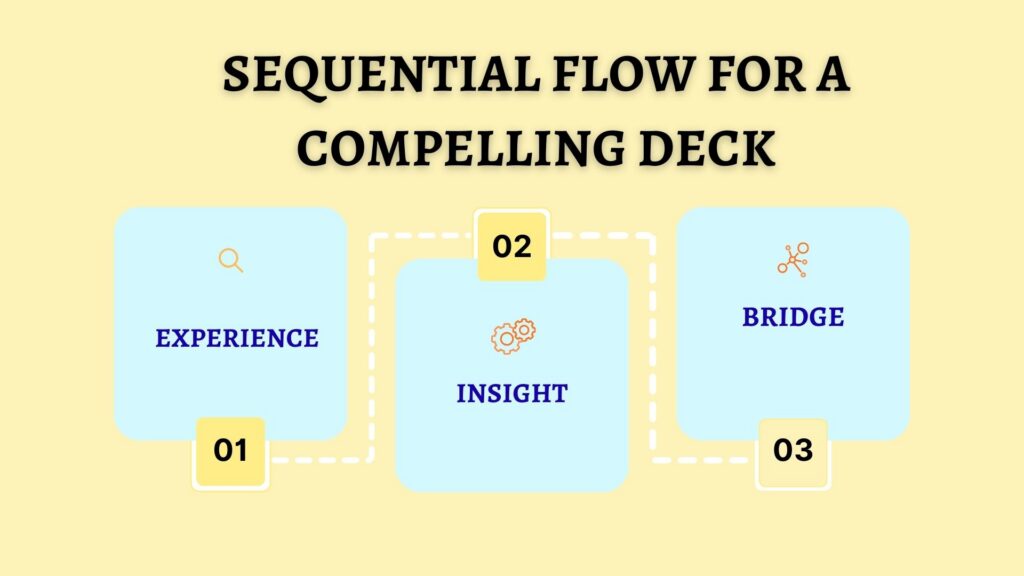
5. The Modern Narrative Pattern: Experience → Insight → Bridge
The most compelling decks function like a story rather than a slideshow.
Use this narrative arc:
Experience
Open with the user’s frustration or unmet need.
Insight
Reveal the key observation, discovery, or pattern you identified.
Bridge
Show how your product naturally resolves that tension.
(Sequential flow for a compelling Deck)
This sequential flow works particularly well in scroll-based website decks, where each section acts like a new chapter.
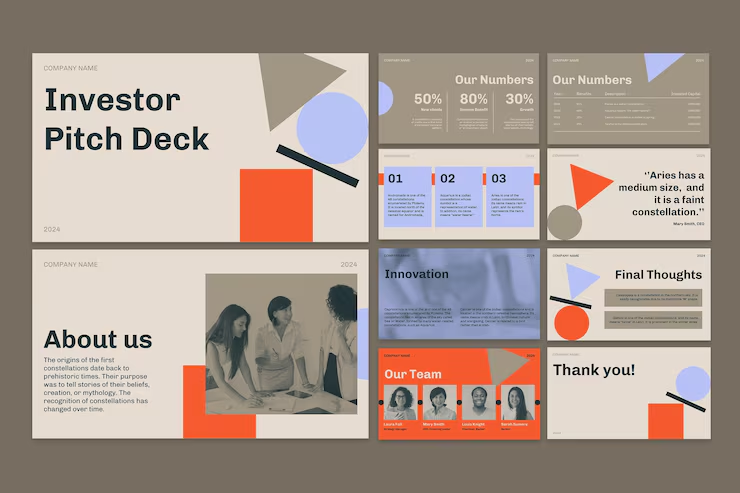
6. What Investors Prioritize in 2026
Investors processing hundreds of decks each month consistently reward one thing: unambiguous clarity.
They want to quickly understand:
The problem
The logic behind the market
Evidence that customers care
Clean storytelling
Visual discipline that signals operational discipline
Beautiful design cannot compensate for a weak story, but a strong story makes even minimal design feel confident.
(Investor-focused pitch deck design)
7. Mistakes Founders Still Make (and How to Avoid Them)
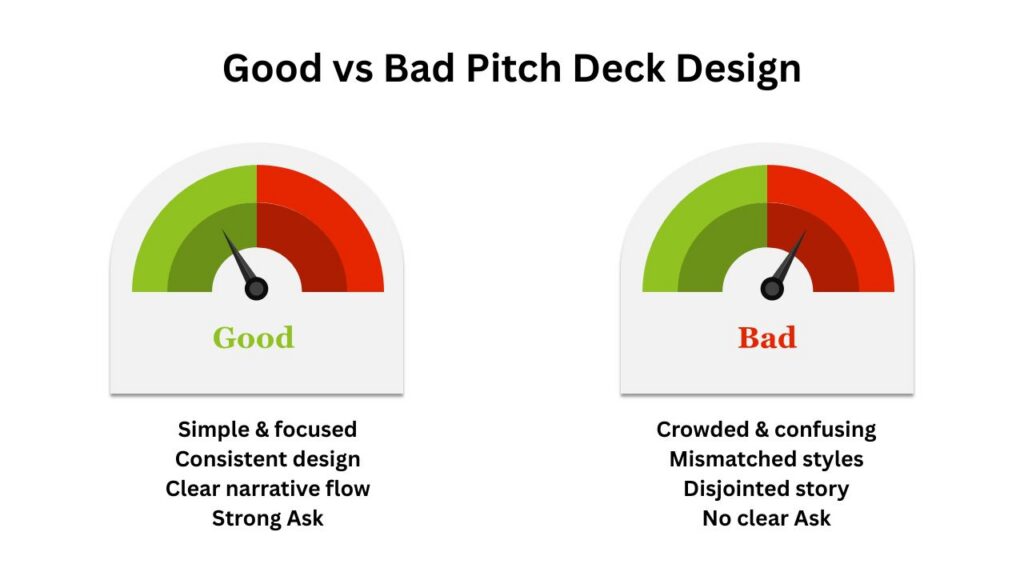
Common issues that weaken otherwise strong ideas:
Slides packed with text
Stories that jump around
Mismatched design elements
Vague or missing ask
Cluttered formatting
Platforms like Koadz automatically enforce visual consistency and spacing, solving many of these design-related problems before they start.
(Good vs poor pitch deck design)
8. How to Prepare a Deck for Investor Distribution
Once the content is solid, prepare it for pitching:
Export a lightweight PDF that’s easy to send
Name files clearly (StartupName_PitchDeck_2025)
Share both formats: PDF and web deck
Track engagement using analytics
Refine the deck based on what investors actually view
Most founders now prefer sending a single, consistent link for their web deck. With platforms like Koadz, the link never changes, so investors automatically see the latest version reducing version confusion and keeping everyone aligned as you iterate.
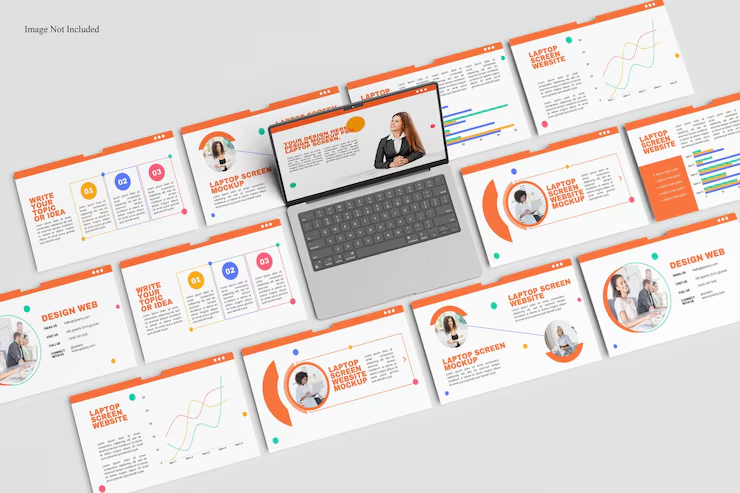
(Deck Format)
9. Storytelling Principles for Maximum Influence
Keep these guidelines in mind to create momentum:
Shift from bullet points to short narratives
Contrast before vs after states
Introduce the product earlier than you think
Use data sparingly but meaningfully
Build a sense of inevitability leading to the ask
The objective is not just to explain. It’s to make your solution feel like the natural outcome of the story.
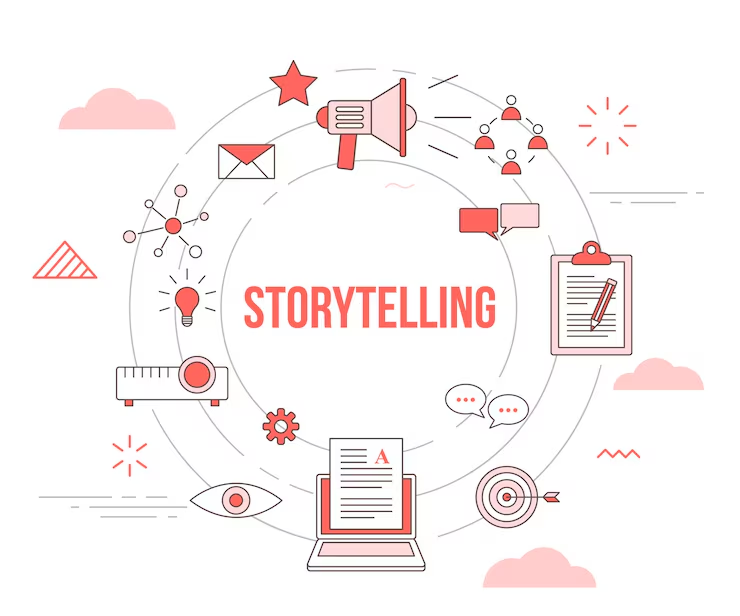
(Narrative-led pitch flow)
10. Tools for Building Pitch Decks (Beginner to Advanced)
Beginner-Friendly
Canva
Google Slides
Intermediate
PowerPoint
Keynote
AI-Powered
Koadz AI, rapid website decks + one click PDF generation
Gamma, automated slide design
Pitch.com, collaboration and shared editing
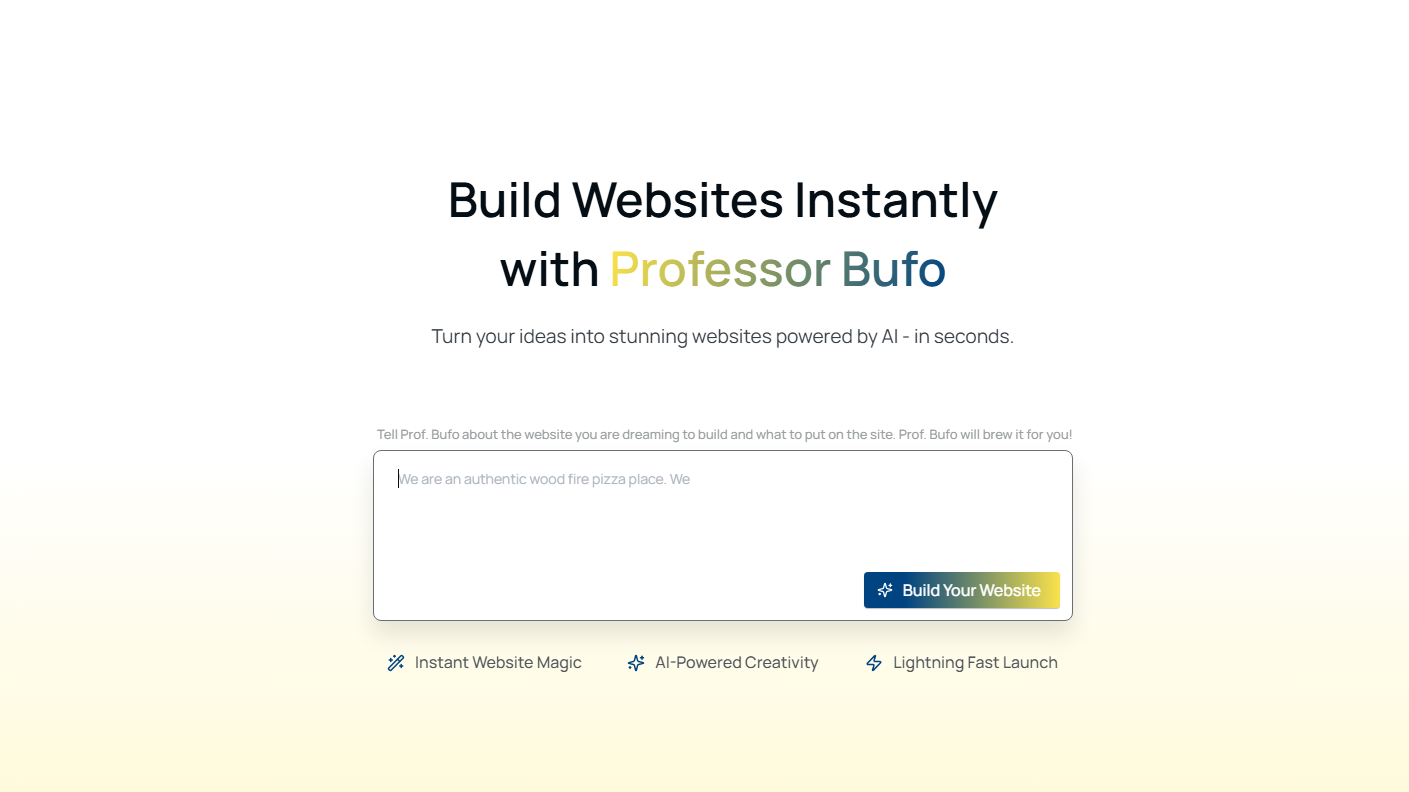
(Koadz AI dashboard)
Conclusion : Pitching Is Becoming Hybrid and Web Decks Are Taking the Lead
Pitch decks aren’t going away. They’re evolving.
Founders in 2025 no longer choose between static PDFs and interactive web experiences. They use both for different stages of the investor journey.
PDFs: efficient for scanning and forwarding
Web decks: stronger for storytelling, engagement, analytics, and conversion

(Collaborative pitch presentation)
Web-based decks deliver what modern fundraising requires: mobile-first viewing, real-time updates, layered storytelling, performance insights, and direct calls to action.
PDFs open the conversation.
Web decks carry it forward.
And with AI tools like Koadz handling layout, spacing, branding, and formatting, founders finally reclaim their time to strengthen their narrative and pitch with confidence. Pitch with intention. Build with speed.
Deliver a deck investors can’t overlook.