
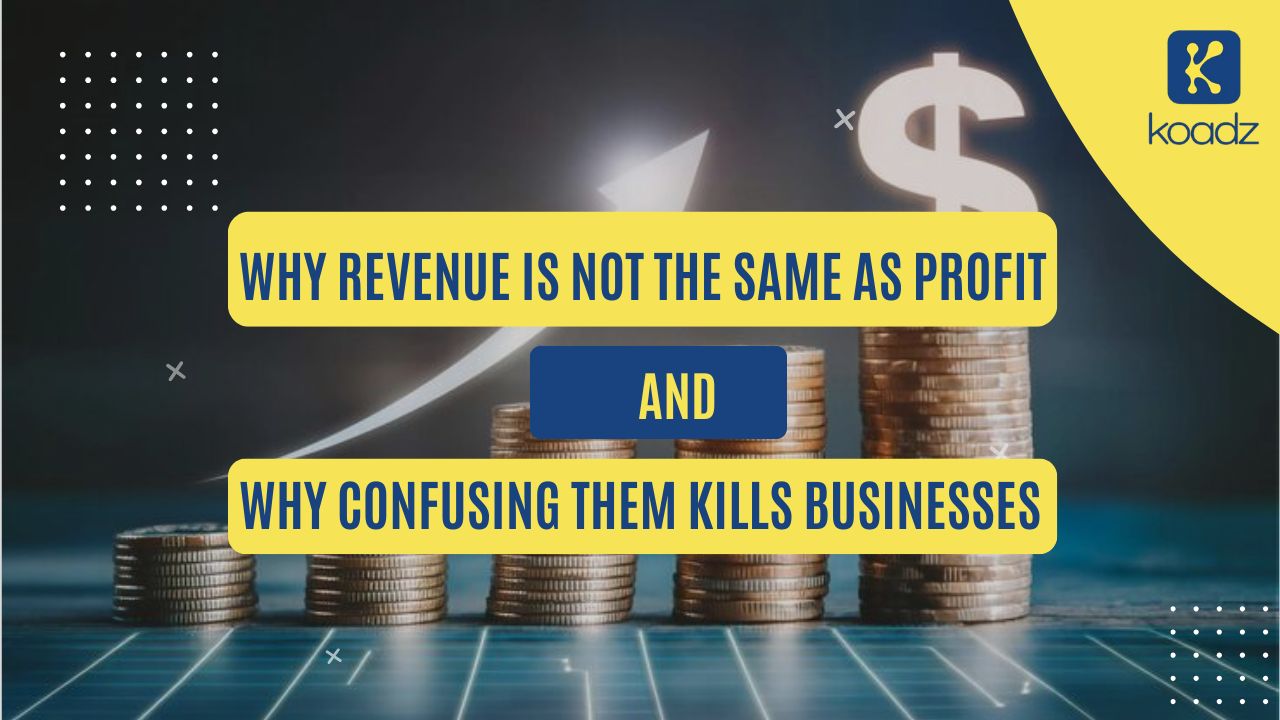
Revenue tells you something is happening.
Profit tells you whether it can continue.
Many businesses fail not because customers stop buying, but because founders confuse sales volume with financial strength. That misunderstanding builds companies that grow fast, look impressive, and still collapse.

(Symbolic image of revenue-driven growth highlighting momentum without guaranteed profitability.)
Revenue creates momentum. Profit and cash flow decide survival.
The Metrics Founders Love Too Much
Revenue milestones feel good.
₹1 crore in sales.
Fastest-growing startup in the category.
Record-breaking monthly numbers.
Revenue is visible. It attracts attention, validation, and confidence. But it does not reveal whether the business is stable. It only shows that money is entering the system, not whether it stays.

(Illustration of a team celebrating business growth.)
This is why many founders celebrate growth while quietly accumulating risk.
Growth That Weakens the Business
A business can grow revenue while becoming financially fragile.
This happens when sales scale faster than margins, cash collection, and cost control. Every new customer increases operational load, stretches working capital, and raises fixed expenses.
Indian business history offers clear warnings.
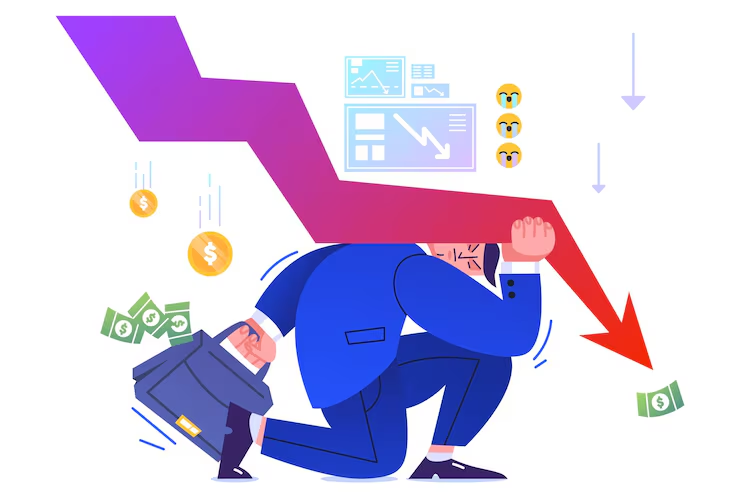
(Illustration of a business facing financial decline)
Jet Airways generated nearly ₹30,000 crore in revenue yet collapsed under debt, delayed receivables, and liquidity stress. Housing.com grew users aggressively but burned capital on marketing faster than returns justified, forcing a merger in 2017. Big Bazaar dominated physical retail but fell in 2022 under leverage and fixed costs.
In all cases, revenue delayed the realization of deeper problems.
Why Confusing Revenue and Profit Destroys Businesses
1. Costs Grow Faster Than Sales
Revenue is calculated before expenses. Profit is what remains after reality is accounted for.
Gross profit subtracts cost of goods sold. Operating profit removes salaries, rent, and overhead. Net profit includes taxes and interest, the final measure of sustainability.
SaaS companies often target 70 to 80 percent gross margins to allow efficient scaling. Retail businesses operate with thinner margins and must be extremely disciplined.
When net margins drop below 5 percent, even small disruptions can become existential threats.
2. Customer Acquisition Stops Making Sense
Growth becomes dangerous when acquiring customers costs more than they generate.
Healthy businesses track:
- CAC payback under 12 months
- LTV to CAC ratio above 3:1
When these numbers slip, each additional sale increases losses. Revenue rises, but cash drains faster.
This is often compounded when businesses depend on external platforms for visibility. Owning high-conversion assets like your website becomes critical. Tools such as Koadz, an AI website builder, help businesses launch and iterate conversion-focused websites quickly without heavy development costs, reducing long-term acquisition dependency.
This risk is explored further in The Real Cost of Not Owning Your Customer Data.

(Illustration of revenue growth and financial calculations)
3. Scale Increases Complexity and Fixed Costs
As revenue grows, so does complexity.
More employees, tools, vendors, and processes add fixed costs that do not shrink when demand slows. Salaries, office leases, and software subscriptions continue regardless of sales performance.
What initially feels like scale eventually becomes rigidity.
This is why clarity in positioning and communication matters. Businesses that rely on clear, founder-led narratives often reduce waste in marketing and sales, a theme explored in Why Founder Presence in Content Is Crucial.
Operational simplicity also extends to digital infrastructure. Using AI-led platforms like Koadz allows teams to maintain and update websites without adding technical overhead, keeping costs flexible as the business evolves.
4.Cash Flow Breaks Before Profit Does
Profit on paper does not equal cash in the bank.
Accrual accounting records revenue when a sale is booked, not when payment is received. Cash flow tracks actual inflows and outflows.
Delayed receivables, overstocked inventory, and long payment cycles trap cash. Studies consistently show that most small and medium businesses fail due to cash flow gaps, not lack of profitability.
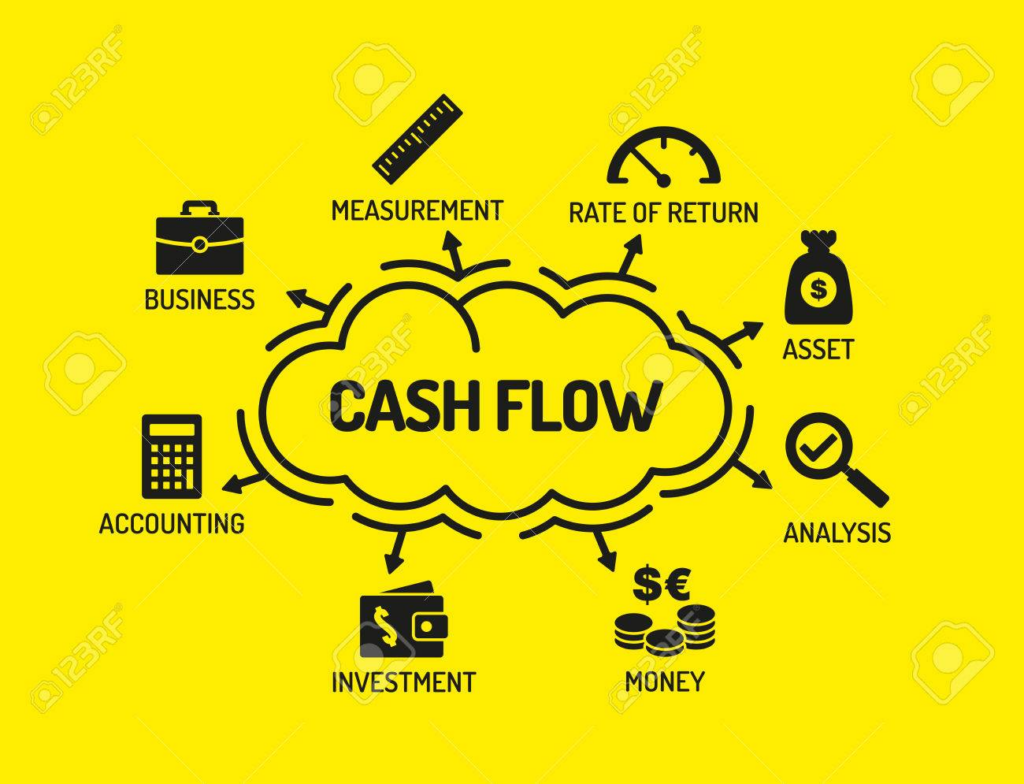
(Illustration explaining cash flow in business)
A company can appear profitable and still miss payroll.
The Delayed Feedback Problem
Revenue hides structural issues.
A business can grow for months or years while weaknesses accumulate beneath the surface. By the time cash dries up, expenses are locked in and corrective action becomes difficult.
This delayed feedback loop explains why business failures often seem sudden even when the warning signs were present early.
Healthy Growth Versus Fragile Growth
Healthy growth strengthens the business:
- Margins improve or remain stable
- Customer retention increases
- Cash cycles shorten
- Profit funds expansion
Unhealthy growth weakens it:
- Costs outpace revenue
- Cash remains stuck in receivables or inventory
- Fixed expenses dominate flexibility
- Each growth phase increases risk
The difference is not growth rate. It is financial structure.
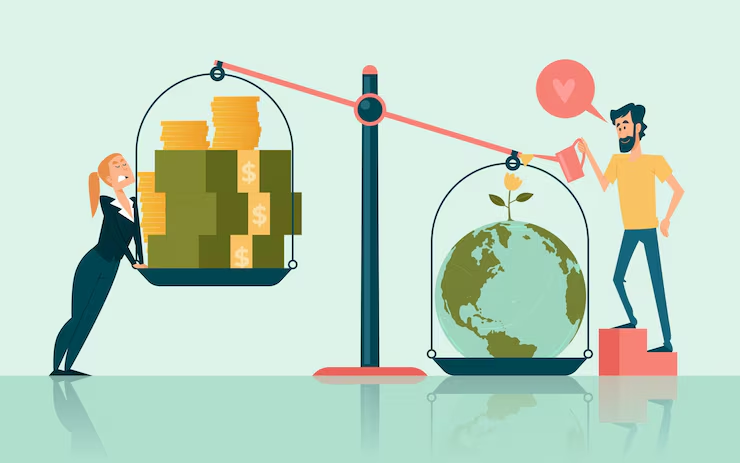
(Illustration comparing profit-driven growth and sustainable growth)
Digital efficiency plays a role here as well. Businesses that run lean, fast-loading, conversion-first websites often generate better-quality leads and faster payback. This is where AI website builders like Koadz quietly support healthier growth without adding recurring agency costs.
This idea is expanded in Why Clean Websites Convert Better Than “Creative” Ones.
Why Profit and Cash Flow Matter More Than Revenue
Strong businesses actively manage cash:
- Receivables collected within 45 days
- Inventory turnover above six times per year
- Thirteen-week rolling cash forecasts
- At least three months of operating cash buffer
They accelerate collections, negotiate longer vendor terms, and cut spending that does not deliver measurable returns.
In an environment where visibility is expensive and competition is constant, controlling attention becomes a financial advantage. This shift is explored in Why Attention Is the New Currency for Small Businesses in 2026.
Proof That Profit-First Businesses Win
Basecamp crossed $100 million in revenue while remaining profitable from its earliest years by staying lean.
Zerodha scaled to over ₹5,000 crore in revenue with exceptionally high margins without external funding.
Mailchimp reached hundreds of millions in revenue while staying profitable, avoiding dilution and forced exits.
These businesses treated profit as a requirement, not a future goal.
The Reality Founders Must Accept
Revenue makes a business look successful.
Profit allows it to survive.

(Illustration of a founder thinking about business strategy)
Revenue opens doors. Profit keeps them open.
Founders who chase revenue alone build fragile companies that collapse under pressure. Founders who respect profit, cash flow, and operational simplicity build businesses that last.
If you want long-term success, stop asking how fast revenue is growing.
Start asking whether the business can survive without external rescue.
That single shift changes everything.