
Most businesses believe they have a marketing foundation because something is working right now.
An Instagram page keeps growing. A marketplace listing brings steady traffic. Ads are converting as long as the budget holds. It feels stable, so it starts to feel permanent.
I’ve watched this happen more times than I can count.
Then something shifts. Reach dips. Costs rise. A platform changes how distribution works. Overnight, the same effort produces very different results, and there is nothing underneath to absorb the impact. What looked like a foundation turns out to be borrowed ground. This same fragility shows up clearly in Why Being Findable Matters More Than Being Viral for SaaS Growth, where visibility exists without control.
Confusing momentum with ownership is one of the quieter ways growth stalls.

(Digital marketing channels illustration)
What Marketing Channels Actually Are
Marketing channels are places where attention passes through, not places you own.
They are useful. Sometimes essential. But the rules are never yours. Social platforms decide distribution. Marketplaces decide ranking. Ad networks decide pricing. Influencers decide when the partnership ends. Review platforms decide context.
Channels are great for discovery, but permanence was never really the deal.
They work well when you need reach quickly. They work poorly when you expect consistency. When policies change or costs rise, your access changes with them. That risk becomes obvious once scale enters the picture, something also explored in The Real Cost of Not Owning Your Customer Data.
This volatility is not a failure of channels. It is simply how they behave.
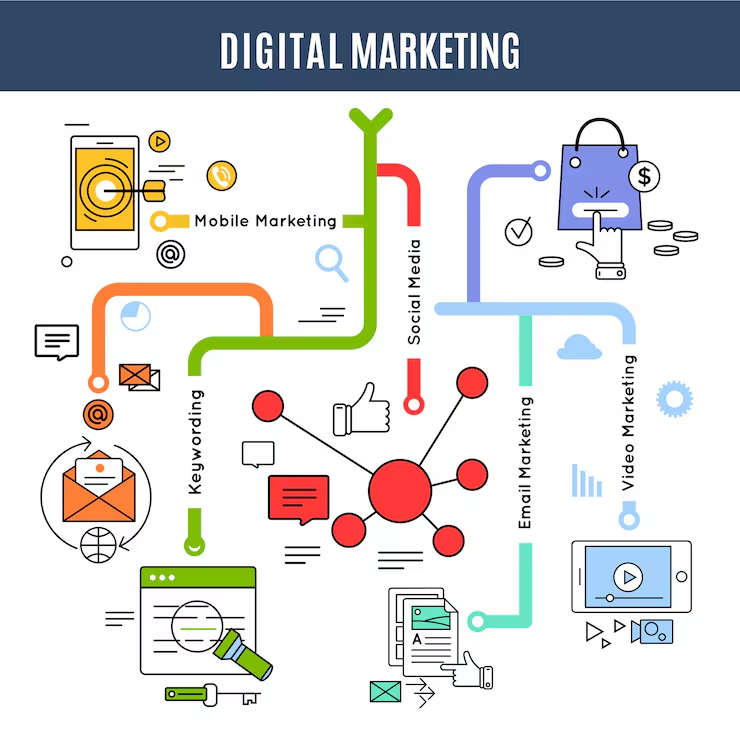
(Digital marketing channels and tools diagram)
What Marketing Assets Actually Are
Assets behave differently because they belong to you.
A website does not lose reach because a feed changes. A blog does not charge more because competition increases. An email list does not disappear overnight.
These things continue working after the initial effort. They allow follow-up. They create familiarity. They turn one interaction into something ongoing.
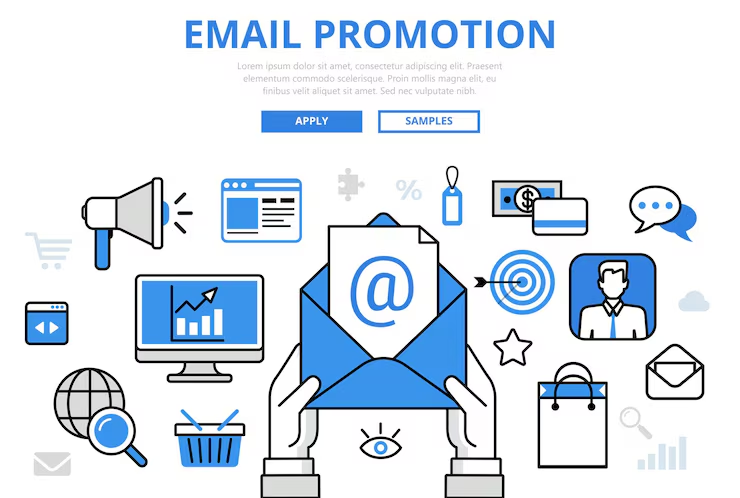
(Email list as a marketing asset)
An asset is not a single post or campaign. It is something that stacks value over time. That is why owned surfaces increasingly replace social profiles as trust anchors, a shift discussed in Why Websites Are the New Resumes in 2026.
Assets store advantage. Channels only provide access.
Why Confusing the Two Slows Growth
When channels are treated like assets, everything resets too often.
A drop in reach means another campaign. Higher costs mean larger budgets. Spikes come and go without leaving anything behind. Customers arrive, interact once, and disappear.
Think about how many times you have rebuilt the same campaign just to reach the same people again.
There is no memory in the system. No place for relationships to deepen. No compounding effect.
Growth stays linear.
Effort goes in.
Results come out.
Then repeat.

(Business growth from owned marketing assets)
Over time, this becomes expensive and draining, especially as attention fragments. This is the same tension described in Why Attention Is the New Currency for Small Businesses in 2026.
Without assets, momentum never turns into stability.
The Compounding Advantage of Assets
Assets move differently.
A useful article can bring traffic for years. An email list grows every time a campaign runs instead of starting from zero. A clear website improves conversion without additional spend.
Channels create spikes. Assets create baselines.
The strongest businesses do not choose one or the other. They use channels to bring people in and assets to make sure those people do not vanish. That is where compounding begins, when each interaction strengthens the system instead of ending it.
This is not always obvious while things are still working.
Making Asset Building Easier Than It Used to Be
Building assets used to feel slow and technical. That has changed.
Today, tools exist that shorten the gap between attention and ownership. Platforms that help teams launch structured websites, publish content hubs, or capture leads without heavy setup make asset building more accessible.
Instead of stitching systems together manually, teams can move faster from channel activity to something they control. This is where Koadz fits naturally, helping turn traffic and ideas into durable presence without turning it into a long project.
When that handoff becomes easier, far less value leaks away.
The Strategic Insight
Marketing channels create discovery. Marketing assets create resilience.
The businesses that last are not the ones chasing the biggest spikes or the loudest campaigns. They are the ones quietly converting attention into things they own.
(Business growth built on long-term marketing assets)
Channels are still useful. They always will be.
But the real question is what happens after the click.