
The assumption most businesses never question
Many businesses believe they own their customers.
What they actually own is access that can be revoked, restricted, or repriced at any time.
Growth today is often mediated through platforms. Discovery happens on social feeds. Transactions flow through marketplaces. Communication relies on tools that sit between the business and the buyer. As long as everything works, this arrangement feels stable.

(Customer data and analytics accessed through digital platforms)
But stability built on dependency is fragile.
When rules change, visibility drops, or costs increase, businesses realize that what they built was not a durable asset. It was a temporary advantage granted by someone else.
This is not a marketing problem. It is a structural one.
Platform growth feels like ownership until it doesn’t
Platforms are excellent at one thing. They aggregate attention.
They decide which brands are visible, which offers are prioritized, and which relationships are worth maintaining. Businesses plug into this system because it works, especially early on.
Over time, though, the trade-off becomes clear.

(Social media platforms controlling attention and engagement through algorithms)
You gain reach but lose control.
You gain scale but lose direct insight.
You gain speed but sacrifice independence.
Customer data is where this dependency becomes permanent.
What it actually means to own customer data
Owning customer data has nothing to do with follower counts or impressions.
It means the business directly controls:
How customers can be contacted
What they have purchased and when
How they interact across channels
What they have consented to receive
Where they are in their lifecycle
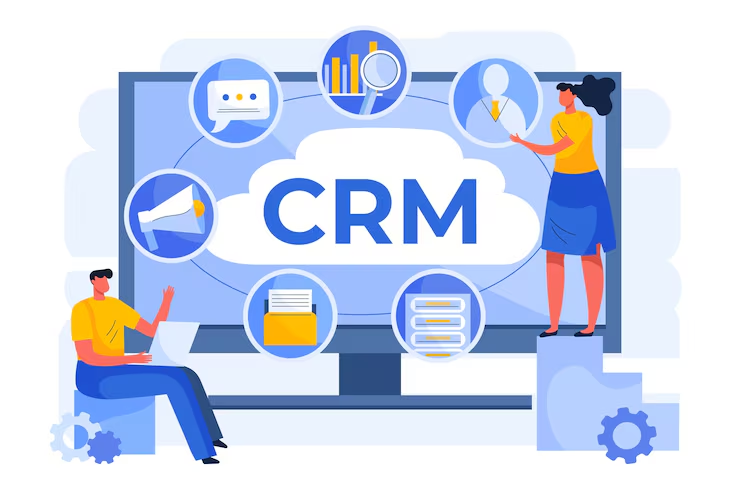
(Customer data managed across CRM systems and touchpoints)
When this information is owned and trusted, communication does not require a gatekeeper. Re-engagement does not require repurchasing access. Personalization becomes practical rather than theoretical.
This is what turns customer relationships into an asset instead of a recurring expense.
Without this ownership, every growth initiative sits on borrowed infrastructure.
How ownership erodes without anyone noticing
Most businesses do not lose control of customer data overnight.
They lose it gradually through fragmentation.
Customer information spreads across CRMs, marketing tools, ecommerce platforms, analytics systems, and support software. Each system captures a version of the customer. None reflect the full reality.

(Fragmented customer data spread across multiple systems and dashboards.)
Over time, records decay. Fields go stale. Duplicates multiply. Teams stop trusting the data and start working around it.
This slow erosion connects closely with the friction described in “The Psychology Behind ‘I’ll Do It Later’ and Why It Quietly Kills Momentum,” where small delays compound into structural inefficiency. What often gets missed is that fragmented data does not just slow teams down. It weakens decision-making at the core.
This is where businesses begin looking for ways to unify, validate, and standardize customer data across systems. Platforms like Koadz are typically introduced at this stage, not to add more data, but to restore confidence in what already exists by creating a single, reliable customer view.
The hidden costs of not owning customer data
When the customer relationship is mediated, the surface-level risks are obvious. Reach fluctuates. Acquisition costs rise. Re-engagement requires payment.
The deeper costs are harder to measure.
Revenue leaks instead of failing outright
Inaccurate or incomplete data quietly undermines revenue.
Retention efforts weaken because behavior cannot be anticipated. Cross-sell opportunities are mistimed or missed. Personalization becomes generic because context is missing.
Marketing teams spend more to achieve less. Sales teams spend time fixing records instead of progressing deals. Growth slows, not because demand disappears, but because insight does.
When systems remain disconnected, timing breaks down completely. Customers are treated like strangers even after repeated purchases. Loyalty erodes without a single obvious failure point.
Trust degrades before customers leave
Customers notice when brands do not remember them.
Being asked for the same information repeatedly signals disorganization. Forgetting preferences signals indifference. Inconsistent messaging signals that the relationship is shallow.
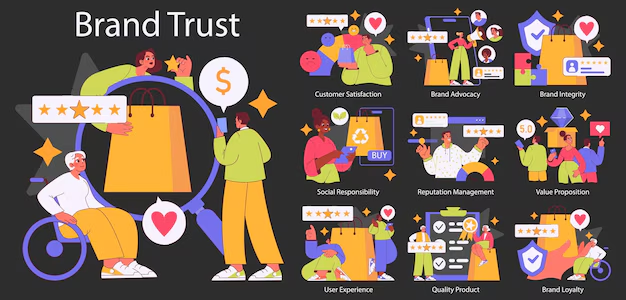
(Illustration showing brand trust built through consistent customer experience)
This reflects themes from “The 2026 Guide to Brand Image Consistency Across Your Website,” where inconsistency, even when unintentional, weakens trust far faster than poor design ever could. Data quality is not a backend concern from the customer’s perspective. It is experienced directly through friction.
There is also a less visible risk. When customer behavior primarily lives inside third-party platforms, it often contributes to aggregated intelligence that benefits the broader ecosystem, including competitors. The business provides insight but does not fully own it.
Regulatory and security exposure increase at the same time. Fragmented data is harder to protect, audit, and govern.
Teams slow down and burn out
Poor data creates friction everywhere.
Sales reconciles spreadsheets instead of selling.
Marketing debates which numbers are correct.
Data teams clean data instead of analyzing it.
Leadership hesitates because confidence is low.

(Team overwhelmed by messy data and constant rework)
This operational drag compounds over time. Every initiative takes longer. Every decision carries more uncertainty.
AI does not fix this. It amplifies it.
As discussed in “How Businesses Can Show Up in AI Answers in 2026,” AI only performs as well as the inputs behind it. Weak data creates confident but flawed outputs. Businesses that cannot trust their own data struggle to keep pace with competitors who can move decisively.
What businesses actually lose
The cost of not owning customer data looks like this:
- Higher acquisition costs because retention underperforms
- Weak lifetime value because re-engagement is unreliable
- Limited personalization because insight is fragmented
- No protection against platform or policy shifts
Growth becomes expensive. Loyalty becomes fragile. The business becomes reactive instead of resilient.
How data-owned businesses behave differently
Businesses that truly own their customer data operate with a different posture.
They launch faster because they know who they are speaking to.
They test cheaper because communication is direct.
They adapt faster because insight is centralized.
They survive platform changes because relationships are not intermediated.
They treat data as infrastructure.
That mindset aligns closely with ideas from “The Complete Guide to Brand Guidelines for 2026,” where consistency is treated as a system, not a creative preference.
That means validating information at the point of entry, standardizing formats, unifying identities across systems, and auditing continuously to prevent decay.
This is where tools like Koadz fit naturally into the stack. Not as a growth hack, but as a foundation that keeps customer data accurate, connected, and usable as complexity increases.
When data is trusted, execution speeds up. Experiences become consistent. Loyalty compounds over time.
This is not a tooling decision
Owning your customer data is not about adding another product.
It is about control.
It determines whether growth is something you own or something you rent. Whether value compounds or leaks. Whether the business is resilient or exposed.
(Resilient business growth through ownership and control)
If you do not own your customer data, you do not fully own your business.
Ownership creates stability.
Stability allows endurance.
This is not a technical upgrade.
It is a strategic decision about who controls your future.