
The Cost Structure of Traditional Website Maintenance
Most website updates still follow a fairly linear process. Not always documented, but it’s there if you look closely. Something feels off, maybe conversions dip, maybe someone just says the page isn’t working, and then the chain starts. Design picks it up, development builds it, QA checks it, and eventually it goes live.
It works, technically. But it’s slower than people expect, just not in an obvious way.
Even small changes don’t stay small. A button tweak sounds trivial until it passes through multiple people. Same with copy edits or layout changes. Each step adds a bit of delay. On its own, it’s fine. Over time, it adds up.
And then there’s how decisions are made inside that system. A lot of updates are still based on instinct. What looks better, what feels right, what someone prefers. Not always, but often enough. The impact doesn’t show up immediately, which is why it gets ignored. You see it later, usually in performance that just doesn’t improve the way it should. That’s the pattern behind Design Mistakes That Are Costing You Leads, where nothing looks obviously broken, but results slowly slip.

(A person interacting with a digital workflow interface, representing automated processes and AI-driven design systems)
AI-Assisted Design Workflows and Automation
AI changes this, but not just by making things faster. That’s the surface level benefit. The deeper shift is in how iteration actually happens.
Instead of creating one version and hoping it works, you can generate multiple variations from the start. Different layouts, different structures, small differences in messaging, all tested at the same time. It’s not a dramatic change at first glance, but it changes the loop.
And this is where things start to shift.
You’re no longer waiting weeks to understand if something worked. Patterns begin to show earlier. Some variations clearly perform better, some don’t, and over time the system starts recognizing those patterns before testing is even complete.
It doesn’t remove human input. If anything, it changes it. Less time spent building every variation manually, more time spent deciding what direction to explore. You also start noticing something interesting. Simpler versions tend to perform better more often than expected. That lines up with Why Your Website Should Answer Fewer Questions, Not More, where reducing friction usually beats adding more information.
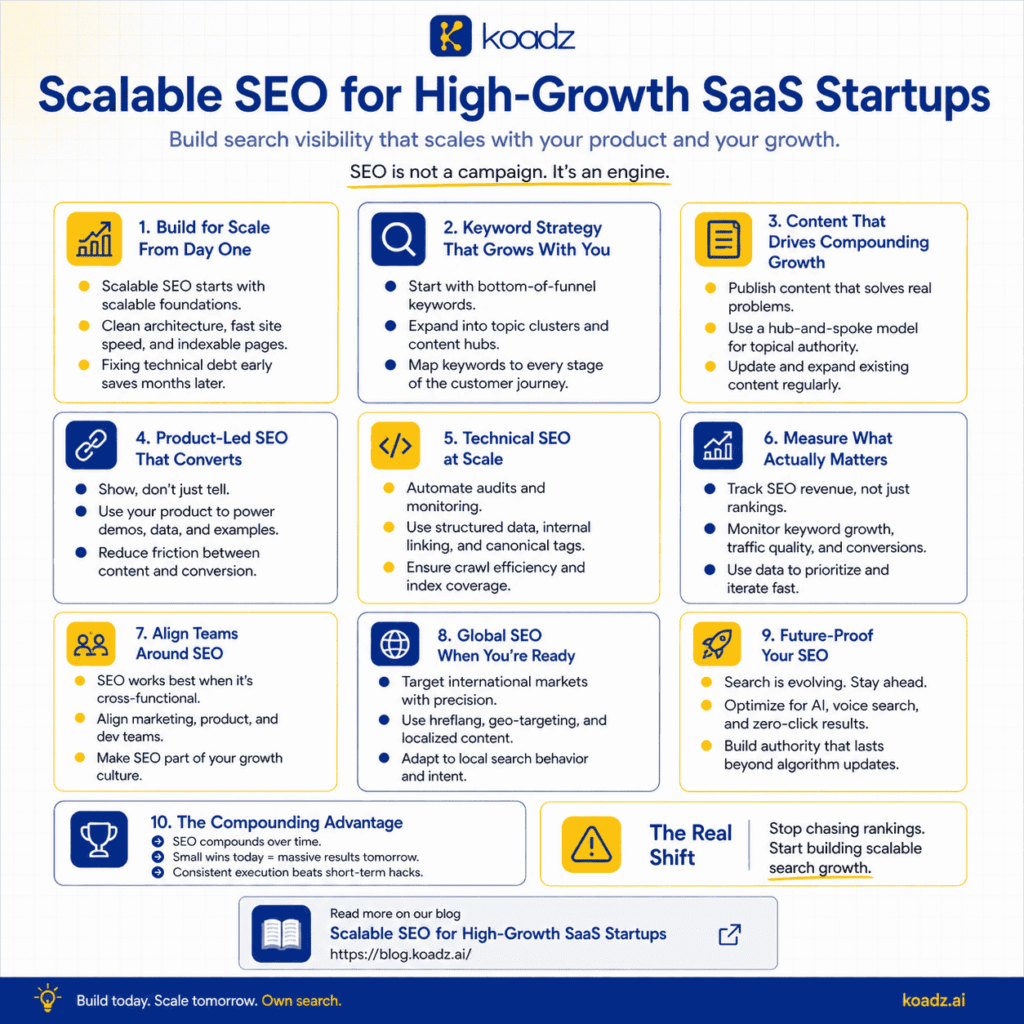
(An infographic outlining scalable SEO strategies for SaaS startups, including keyword planning, content growth, and performance tracking)
Comparative Cost Analysis: AI vs Manual
When you step back and look at cost over a longer period, the difference becomes clearer. Manual workflows scale in a very predictable way. More updates mean more hours, more coordination, more effort.
AI assisted workflows don’t scale the same way. The time per update drops, yes, but more importantly, updates don’t have to happen one after another. They can run in parallel.
That part changes everything.
It’s not just about saving money. It’s about increasing how often you can improve something. Instead of a limited number of updates, you’re testing continuously. And once that starts happening, learning accelerates.
A lot of the issues covered in Common Website Mistakes That Kill Conversions exist for a simple reason. They’re never tested. Not because they’re difficult to fix, but because the system doesn’t allow enough iteration in the first place.
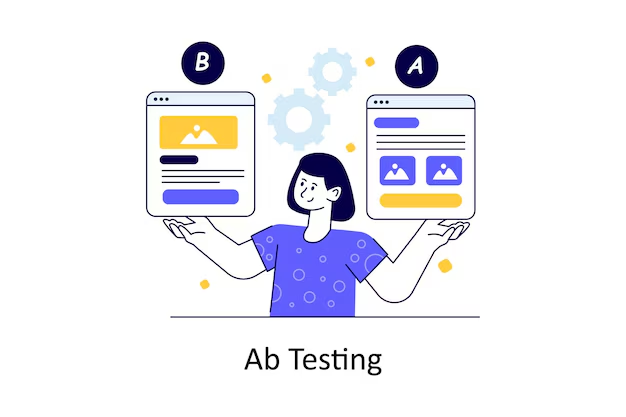
(An illustration of A/B testing showing two webpage variations being compared to determine which performs better)
Performance Lift and Revenue Attribution
Cost reduction is easy to measure, so it usually gets the most attention. But the more meaningful impact tends to come from performance improvements, even when those improvements look small.
A slight increase in conversion rate doesn’t seem dramatic at first. It’s easy to overlook. But over time, it compounds. Especially if traffic is consistent.
What changes here is clarity. You can actually connect improvements to specific changes. Not perfectly, but enough to understand what worked and what didn’t. That makes future decisions easier. Less guessing, more pattern recognition.
And it doesn’t happen all at once. It builds slowly.
Data Quality and Instrumentation Requirements
None of this works without clean data. That part gets underestimated more often than it should.
If tracking is incomplete or inconsistent, the system ends up optimizing noise. It doesn’t matter how advanced the tooling is. Bad input leads to bad output. Every time.
You need to understand how users move through the site, where they drop off, what they interact with, what leads to conversion. Without that, you’re just making faster guesses.
This is where How to Measure Experience, Not Just Performance becomes relevant, because surface metrics don’t tell you much on their own. You need context. Otherwise, the numbers look fine, but they don’t actually mean anything useful.
(A rocket launching alongside an upward graph, representing growth and performance improvement over time)
Human-in-the-Loop Design and Guardrails
Even with all of this, you can’t remove human judgment entirely. AI will optimize for whatever you tell it to optimize for, even if that thing isn’t aligned with long term outcomes.
That’s where guardrails come in.
Brand consistency, accessibility, overall user experience, these don’t always show up in immediate metrics, but they matter more than people expect. Without boundaries, it’s easy to optimize for short term gains and create long term problems.
You see this pattern in Why Clean Websites Convert Better Than “Creative” Ones. Simplicity tends to perform better, not because it’s boring, but because it reduces friction. Overcomplicating things might look impressive, but it usually confuses users.
Long-Term Strategic Implications
Over time, the biggest difference between businesses isn’t the tools they use. It’s how often they learn.
Companies that iterate more frequently collect more data, test more variations, and build a deeper understanding of their users. It doesn’t feel like a big advantage at first. It builds slowly.
Then it compounds.
Each experiment adds a small piece of insight. And those insights start stacking in ways that are difficult to replicate. Competitors can copy visible elements, layouts, copy, structure, but they can’t easily copy the learning behind those decisions.
And this is where it connects to The Shift Away from Traditional Marketing Funnels (And What Replaces Them in 2026). Static funnels don’t really hold up anymore. Systems that adapt continuously do.
The real advantage isn’t a single big change. It’s the accumulation of smaller ones, happening consistently.