

The internet is global.
Human behavior is not.
Geography still shapes how people trust, pay, read, wait, and buy. Digital tools remove borders, but they do not remove context. Businesses that ignore geography operate with blind spots. Businesses that understand it gain leverage that competitors struggle to copy.

(Person standing in front of a digital world map, symbolizing how global internet businesses are still influenced by geographic location and regional behavior.)
This is not about localization as an afterthought. It is about geography as a core strategy layer, especially in a world where attention itself has become scarce as explained in Why Attention Is the New Currency for Small Businesses in 2026.
The Myth of Location-Free Digital Business
The most persistent myth in modern business is that digital products are location-agnostic.
Websites load everywhere. Apps ship globally. Ads target at scale. From the surface, it looks like geography no longer matters.
But performance data consistently proves the opposite.
This is why modern AI website builders like Koadz are increasingly designed to adapt layout, content, and performance for different regions instead of treating the website as a single static asset.

(Illustration of people collaborating online from different countries, representing remote work and global internet connectivity while highlighting regional differences in digital behavior.)
The same website, same offer, same pricing, and same ad creative can produce completely different outcomes depending on where the user is located. Conversion rates, trust levels, refund rates, and lifetime value change by region.
Geography did not disappear in the digital era.
It became invisible to those who stopped measuring it.
Why Geography Still Determines Outcomes
Digital infrastructure reduces friction, but it also amplifies regional differences. Geography influences every stage of the customer journey.

(Illustration showing a diverse group of people from different cultural backgrounds standing together, representing how regional differences influence digital behavior and decision-making.)
Payment Behavior Is Regional
People do not pay the same way everywhere.
In India, UPI dominates everyday transactions. In Germany, bank transfers and invoices remain common. In the United States, cards and subscriptions lead. These behaviors tie directly into the real cost of not owning your customer data, a problem broken down in The Real Cost of Not Owning Your Customer Data.

(Illustration of a smartphone making mobile payments across a world map, representing how digital payment preferences differ by region)
Ignoring local payment norms increases checkout friction and kills conversion at the most expensive point in the funnel.
Geo-aware companies design payment flows that feel familiar, not educational.
Language and Tone Drive Trust
Translation is not localization.Illustration of a smartphone making mobile payments across a world map, representing how digital payment preferences differ by region.
Tone, formality, humor, and cultural references determine whether a message feels credible or suspicious. This connects directly to procrastination and decision delay, explored in The Psychology Behind “I’ll Do It Later” and Why It Quietly Kills Momentum.
A direct, aggressive call to action may work in New York and underperform badly in Berlin. A polished global brand voice can feel distant in Chennai, where local cues signal authenticity.

(Illustration of people greeting each other in different languages, representing how language and tone vary across regions and influence trust in communication.)
Data shows that urban millennials convert significantly higher when exposed to neighborhood references, local creators, or city-specific language. These effects are reinforced when color psychology aligns, as detailed in The Psychology of Colour in Branding: A 2026 Evidence-Based Framework.
Delivery Expectations Are Physical
Logistics do not scale like software.
Urban customers expect speed and precision. Semi-urban and rural customers prioritize reliability and cost. Weather, infrastructure quality, and population density all shape delivery tolerance.
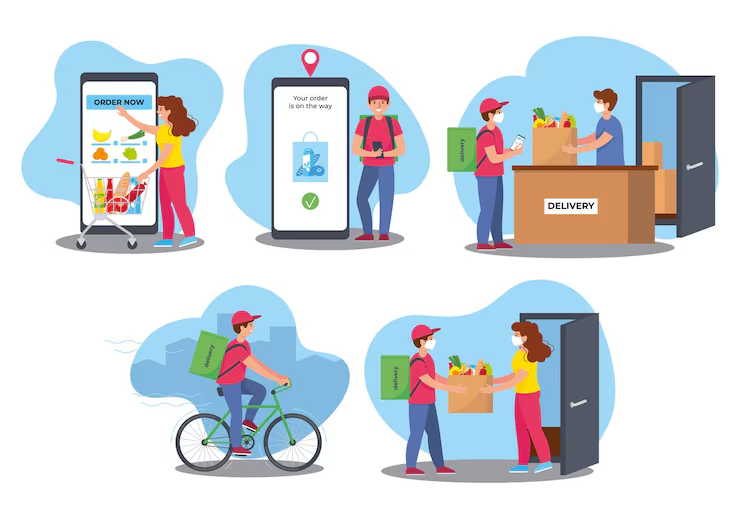
(Illustration showing different stages of ecommerce delivery, including ordering on a mobile app, package handling, and last-mile delivery by bike and on foot, representing how physical logistics vary by location.)
When digital businesses promise the same experience everywhere, they often overpromise in places where fulfillment reality cannot support it.
Cultural Trust Markers Change by Location
In some regions, trust comes from certifications and compliance. In others, it comes from visibility and presence.
Physical touchpoints still matter. Pop-up labs, workshops, or local events consistently generate higher-quality leads than purely online funnels in certain markets. Face-to-face trust carries over into digital conversion.

(Image of two people shaking hands, symbolizing how trust is built through personal relationships and cultural context in different regions)
This shift explains why word of mouth eventually stops scaling, a dynamic explored in Why Word of Mouth Stops Working After a Certain Size.
Competition Is Always Local
You are not competing with the entire internet. You are competing with what your customer sees as alternatives.
In dense metros like Mumbai, customers accept premium pricing for convenience and speed. In lower-density regions, volume and value dominate. Smart firms adjust pricing dynamically based on population density, infrastructure quality, and competitive saturation.

(Illustration of two business people pulling a trophy in opposite directions, representing local competition and the struggle to win customers within a specific market.)
Brand clarity becomes essential here, which is why frameworks from The Complete Guide to Brand Guidelines for 2026: Why They Matter & How to Apply Them Effortlessly play a critical role in maintaining consistency while adapting locally.
Same Website, Different Geography, Different Results
Consider a single product page viewed in three locations.
In Chennai, mobile-first behavior dominates and regional language cues increase engagement.
In Berlin, users spend more time evaluating trust and compliance details.
In New York, speed, clarity, and strong calls to action outperform nuance.

(Illustration of a world map with location markers and hands holding different currencies, showing how the same website performs differently across geographic regions.)
When businesses ignore these differences, they end up with the same problems everywhere. Wrong messaging. Wrong pricing. Wrong expectations.
Low conversion is often not a product problem. It is a geography problem.
What Happens When Geography Is Ignored
Companies that treat digital markets as flat experience predictable failure modes.
Marketing messages feel generic. Pricing feels misaligned. Delivery promises fall apart. Trust never fully forms.

(Illustration of people analyzing charts and segmented data visualizations, representing how customer behavior and performance metrics differ across regions.)
The result is higher acquisition costs, lower lifetime value, and fragile growth.
Geography is not a branding detail. It is a performance variable.
What Geo-Aware Businesses Do Differently
High-performing digital companies operationalize geography across strategy, marketing, and infrastructure.
Precision Geo-Segmentation
Advanced teams segment beyond country and city.

(Illustration of a global network with connected data points across the world, representing precision geographic segmentation and location-based data analysis.)
They use postal code level targeting, device signals, and behavioral clustering to understand micro-markets. ZIP-level targeting consistently outperforms IP-based geofencing in accuracy.
By combining search trend data with weather signals, businesses predict demand spikes before they happen. This foresight is increasingly critical for How Businesses Can Show Up in AI Answers in 2026, where relevance beats reach.
Geo-Economic Market Selection
Elite teams borrow from economic geography.
Gravity models that account for economic output and distance help predict market pull. This insight is especially useful for emerging segments like Profitable Business Ideas for Stay at Home Parents in India, where regional viability varies widely.

(Illustration of a globe connected to social media and digital communication icons, representing how digital platforms reach globally while economic and geographic factors shape regional market response.)
Market selection is not about population size alone. It is about economic gravity.
Infrastructure-Aware Digital Strategy
Digital performance depends on physical infrastructure.
Submarine cable proximity affects latency. Hosting near major cable landings reduces response time and lifts conversion. Data sovereignty rules shape where data can legally live.
Platform Algorithms Reward Locality
Social and discovery platforms favor local relevance.
Geo-tagged content receives algorithmic boosts within regional clusters. Local creators outperform global influencers in neighborhood-driven categories like food, fitness, and services.
The Next Phase: Geo-Intelligence and AI
The future of digital growth is geo-intelligent.

(Person interacting with a large digital map interface powered by artificial intelligence, representing geo-intelligence used to analyze and predict regional customer behavior.)
5G expansion and national broadband initiatives will enable regional behavioral modeling at scale. Geo-AI twins will simulate how different regions respond to pricing, creative, and product changes before campaigns launch.
This evolution ties directly into How to Build a Personal Brand in 2026: A Practical Guide for Everyone, where local credibility increasingly drives algorithmic visibility.
Closing: Borders Are Gone. Context Remains
Digital platforms remove borders. They do not remove culture, infrastructure, or human habit.
Geography still determines how people trust, decide, and buy. Brand consistency across regions matters more than ever, as outlined in The 2026 Guide to Brand Image Consistency Across Your Website.
The companies that win will not be the ones that scale blindly. They will be the ones that scale with context.

(Illustration of people from different cultures standing in front of a world map, representing how global connectivity exists alongside local human behavior and cultural context.)
As websites increasingly function as the primary interface between business and customer, the ability to build, test, and adapt them quickly using AI tools like Koadz becomes a strategic advantage, not just a technical choice
While competitors chase generic growth tactics, geo-aware businesses quietly compound advantage.
They do not just operate online.
They understand where they operate.